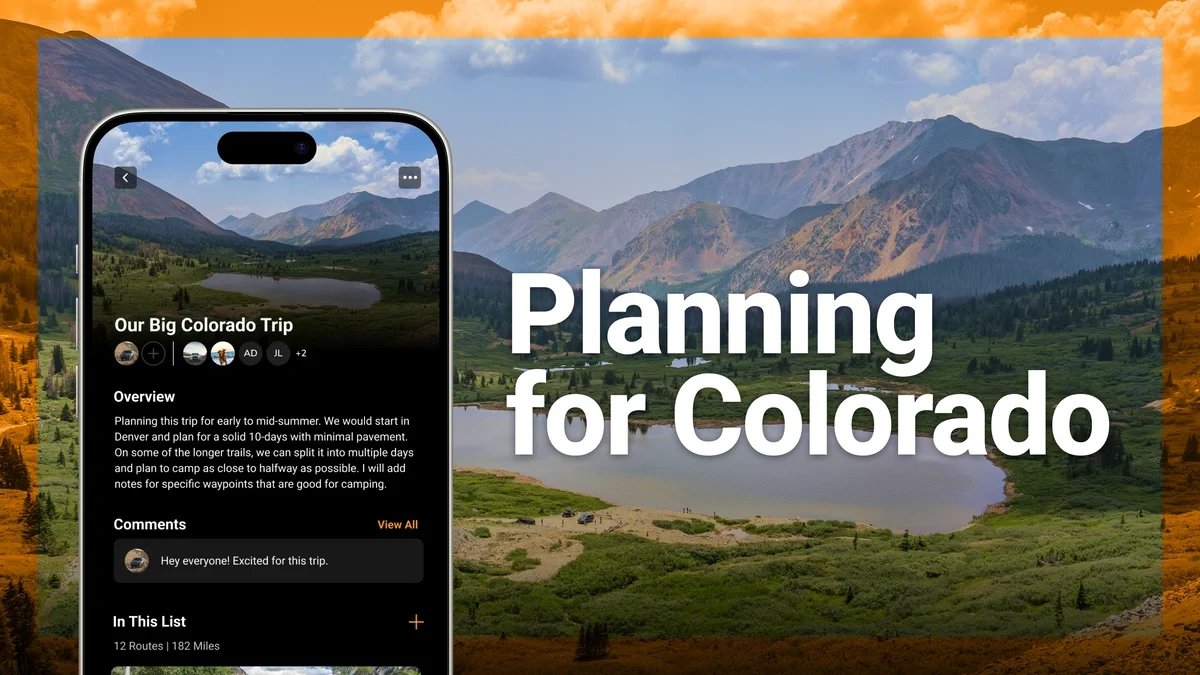
How to: Plan a Colorado Offroad Trip
A complete guide for families, couples, and adventure travelers
Colorado is unlike anywhere else in America for offroad travel. It’s a place where you climb from forest to alpine tundra, cross 100-year-old mining roads carved into mountainsides, and crest passes so high your rig feels like it's touching the sky. For many travelers, a Colorado offroad vacation is a bucket list trip, and with proper planning, it can be the trip of a lifetime.
As lifelong Colorado residents, and because Trails Offroad was originally built out of necessity to explore Colorado ourselves, we wanted to share our experience with you so you can plan your trip with real world perspective. In this guide, we’ll walk through the state’s most notable offroad regions, iconic trails, seasonal considerations, and common mistakes to avoid, along with how Trails Offroad’s trail guides and list tools can help you build an itinerary that truly fits the way you want to travel.
Whether you're a family, a couple, new to off-roading and overlanding, or a seasoned wheeler bringing a rock crawler on a trailer, this is your ultimate resource.
Why Colorado Offroading Is Different and Amazing
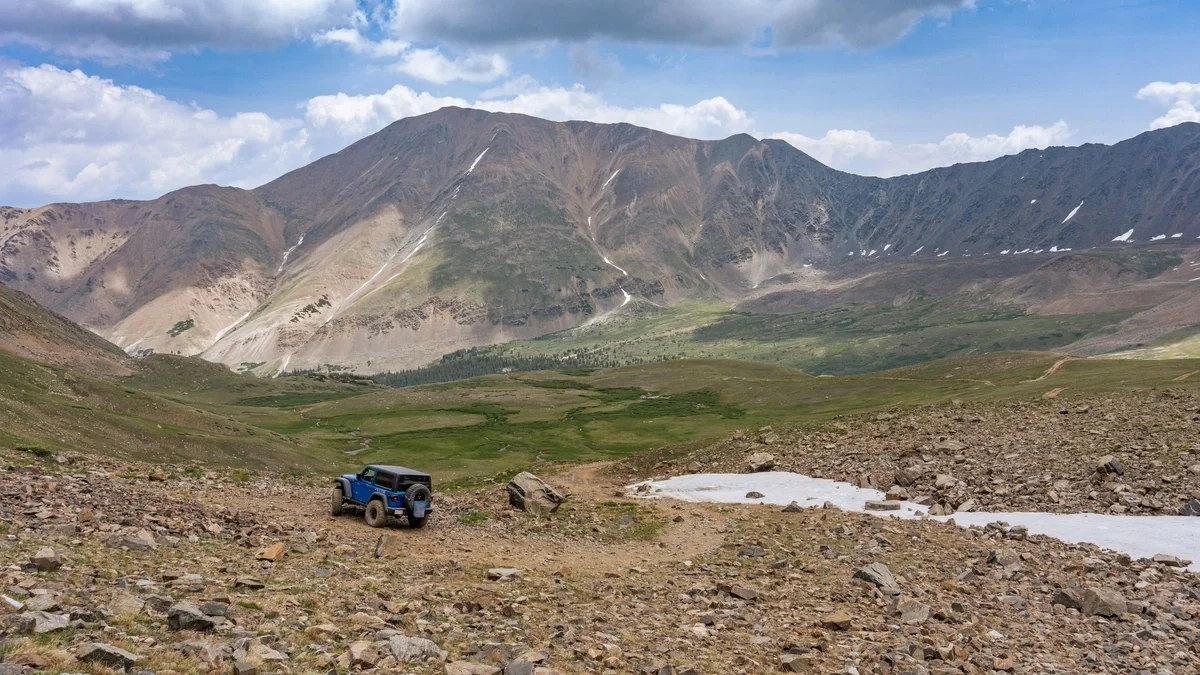
Colorado has a magic that’s hard to describe until you’ve experienced it. You don’t just drive trails. You travel through elevations. Every 1,000 feet unlocks another biome, including sagebrush desert, aspen groves, alpine lakes, tundra, and finally the peaks.
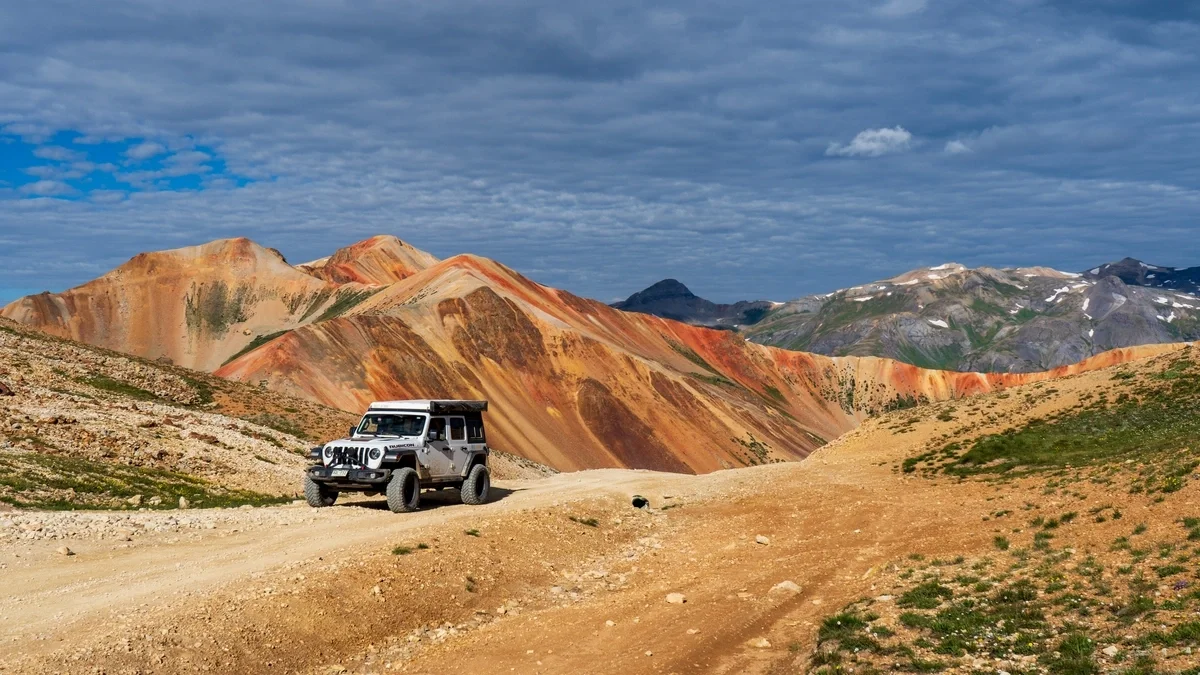
What sets Colorado apart as an offroad destination?
1. Altitude changes everything
Most mountain passes run between 9,000 and 13,000 feet. At this elevation:
- Your vehicle will operate differently
- Weather moves faster
- Your body reacts differently
- Storms can form out of nowhere right before your eyes
It’s beautiful, grand, and humbling. As a fun fact, did you know that Mount Antero is the highest off-road trail in the Lower 48?
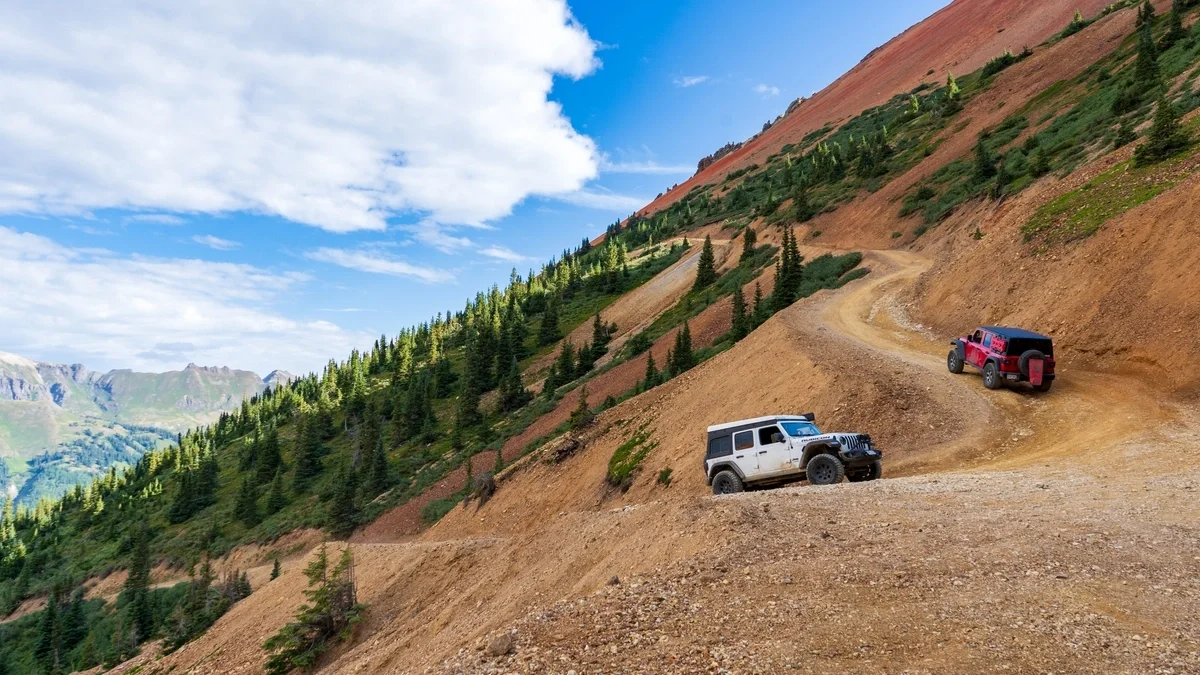
2. Shelf roads are real
Colorado’s mining history means many roads cling to mountainsides. They are safe when driven correctly, but the exposure is real and should be respected.
3. The weather is unpredictable but predictable enough
The general rule of thumb is blue skies in the morning and thunderstorms after 1 pm. Plan with this in mind and start your day early or do not be surprised if you find yourself in a hail storm even in July.
4. The scenery is world-class
Nowhere else offers this unique combination of massive views, wildflower-filled basins, dramatic cliffs, and mining-era relics around every corner.
When to Go and How Weather Works
Best Months
Late June through early October, with Late July being the sweet spot
A typical summer weather pattern is:
- Clear mornings
- Clouds build by noon
- Thunderstorms between 1 and 4 pm
- Clear evenings
Plan your highest elevation passes early.
Leaf Peeping is a thing!
The general rule of thumb is that if you are a leaf peeper, you want to be in the area around the second to third week of September.
Snow and Travel Timing
- Some passes don’t open until mid or late July
- The Alpine Loop opening varies every year
- Early snow can close trails in late September
Where to Go Offroading in Colorado
Colorado is huge and diverse. There are several regions that receive the most attention, although they are certainly not the only places worth visiting in a lifetime. Below are the three most popular areas that most people are interested in.
1. The San Juans: Ouray, Silverton, Telluride
If you want the most iconic high alpine passes, this is where you go.
Nicknamed the Switzerland of America, Ouray is surrounded by towering mountains, waterfalls, ghost towns, and some of the most famous four wheel drive passes in North America.
Pros
- The most spectacular scenery in Colorado
- Legendary trails, including Imogene, Black Bear, and the Alpine Loop
- Tons of mining ruins
- Perfect for photography
- Lots of lodging and campground options
Cons
- Crowds in July and August
- Higher risk of afternoon storms
- Shelf roads are common
- Altitude is intense with many trails above 12,000 feet
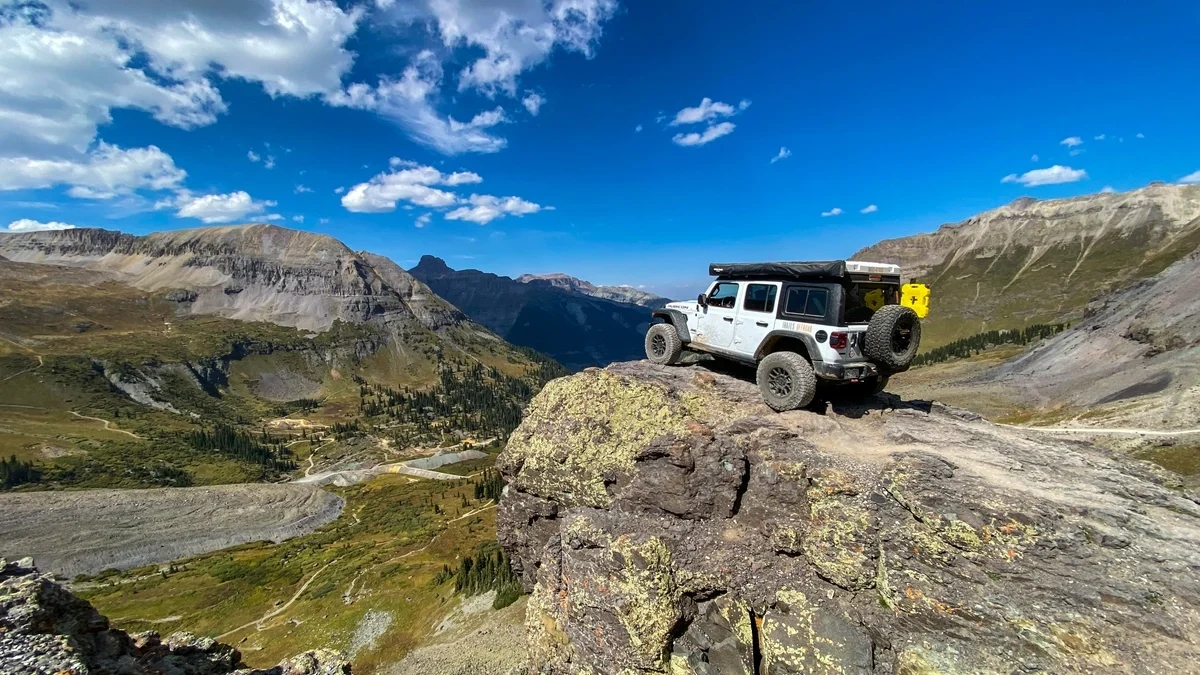
Most Popular Trails
Imogene Pass
A bucket list trail connecting Ouray and Telluride. Wildflowers, bridges, mining ruins, big exposure, and endless views.
Black Bear Pass
One way, iconic, and dramatic. Requires confidence and patience. For many travelers, this is the ultimate Colorado memory.
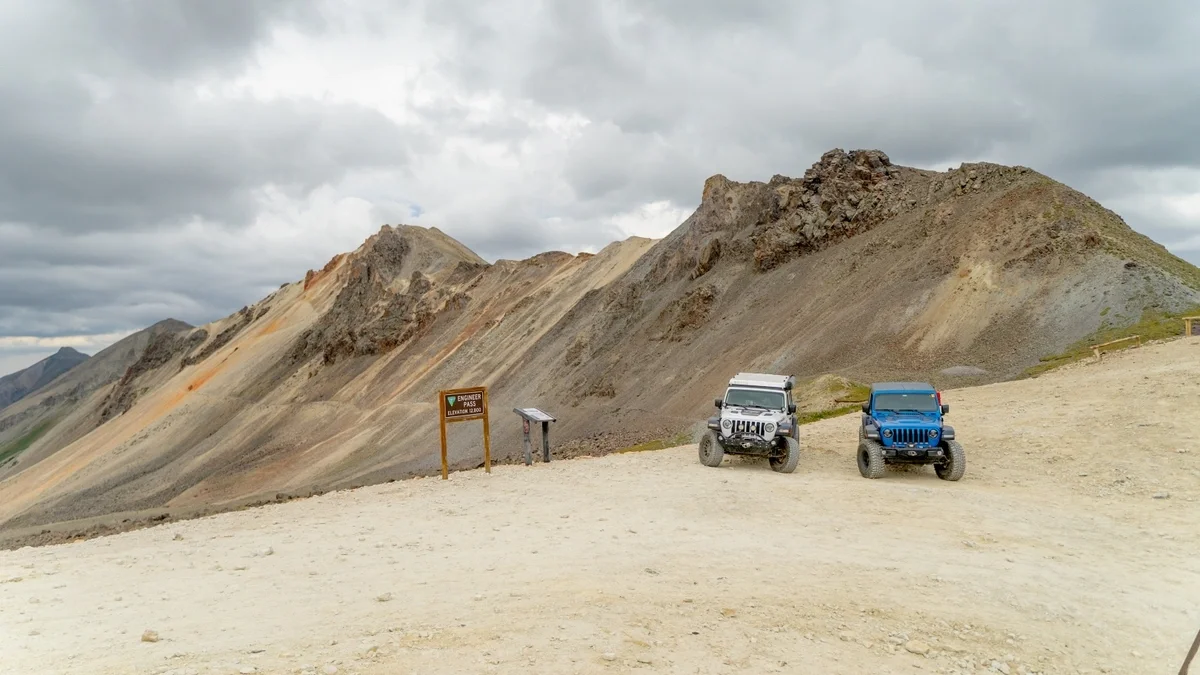
Alpine Loop, including Engineer and Cinnamon
The perfect introduction to Colorado’s alpine passes. Long mileage, stunning basins, lakes, and history.
2. Leadville, Buena Vista, Salida
If you're looking for variety, a central location, big mountains, hot springs, and a mix of beginner-friendly and moderate trails, this is ideal. It’s also one of the easiest areas for families or mixed skill groups.
Pros
- Central to the state
- A perfect mix of easy to moderate trails
- Fourmile Recreation Area offers lots of variety
- Great towns, restaurants, and access
- Aspen Ridge in the fall is unreal
Cons
- Can be dusty
- Summer weekends get busy
- Alpine passes are a bit farther away
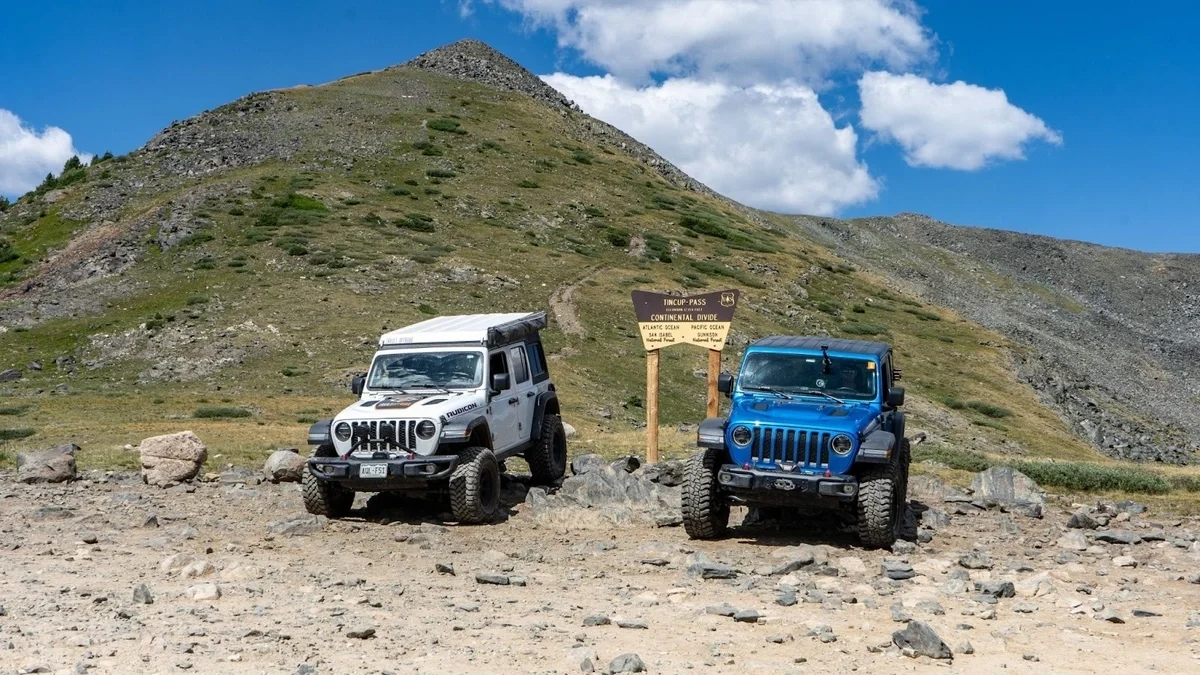
Most Popular Trails
Hancock Pass
A rugged, historic crossing of the Continental Divide that feels remote and raw. Known for mining era remains, rocky terrain, and true backcountry character.
Alpine Tunnel
One of Colorado’s most fascinating historical destinations. Moderate trail driving combined with deep railroad history and high elevation scenery.
Tincup Pass
A classic alpine connector between Buena Vista and the historic town of Tincup. Wide open views, moderate difficulty, and great balance for families or mixed skill groups.
3. Crested Butte and Taylor Park
This area is a dream for dispersed camping and scenic loops.
Pros
- Endless camping
- Lakes, meadows, and wildlife
- Both easy and difficult routes
- Less crowded than Ouray
Cons
- Limited cell service
- Remote location so come prepared
- Campgrounds fill fast
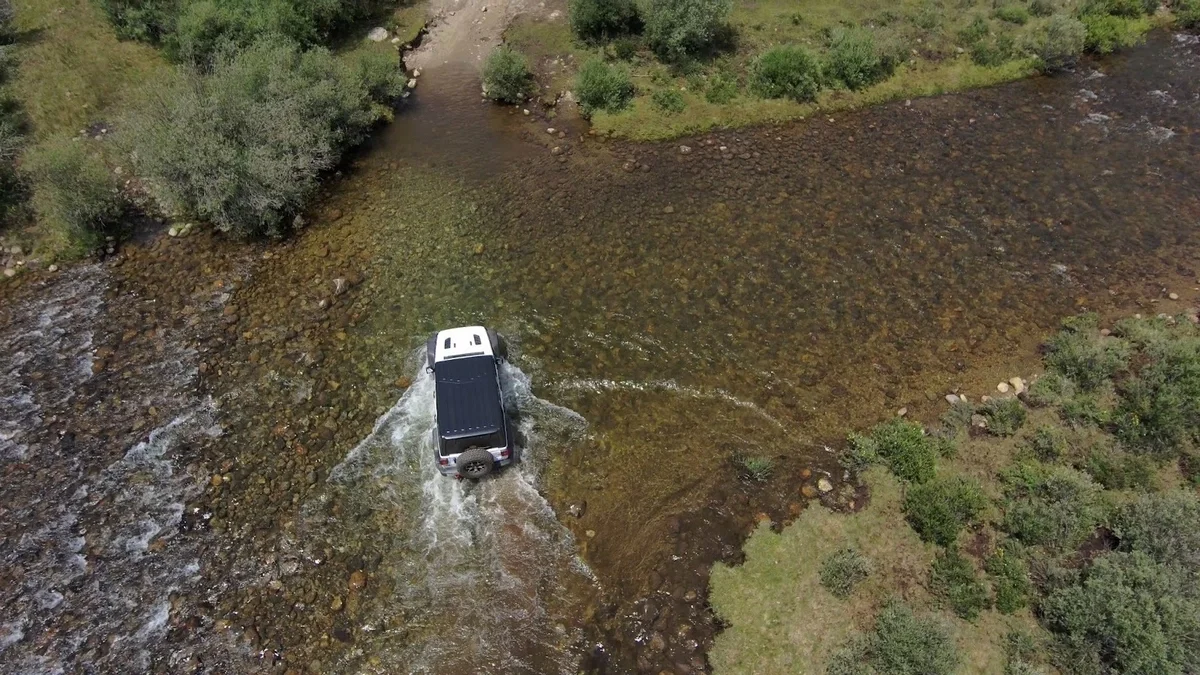
Most Popular Trails
Taylor Pass
A high alpine connector with big scenery and manageable difficulty.
Italian Creek
A scenic, approachable trail perfect for acclimation or a relaxed half-day drive.
Schofield Pass
A dramatic, historic route known for narrow sections and exposure.
Pearl Pass
A remote feeling alpine crossing offering solitude and expansive views.
The Five Big Mistakes People Make When Planning a Colorado Off-Road Trip
These come from years of helping travelers plan their summer and our own experiences as residents of Colorado.
1. Underestimating cold weather
Colorado can receive snow in any month, including July or August. Temperatures at 12,000 feet can be 30 to 40 degrees colder than the town below. People arrive in shorts and hoodies, shocked.
Altitude affects temperature. As you climb in elevation, the air becomes thinner and holds less heat. As a result, temperatures drop steadily with increasing altitude. The standard rate, known as the environmental lapse rate, averages about 3.5 degrees per 1,000 feet of elevation change.
A real example of this is:
If it’s 75°F in Ouray at 7,700 feet, it may be only 45°F at the top of Imogene Pass at 13,216 feet.
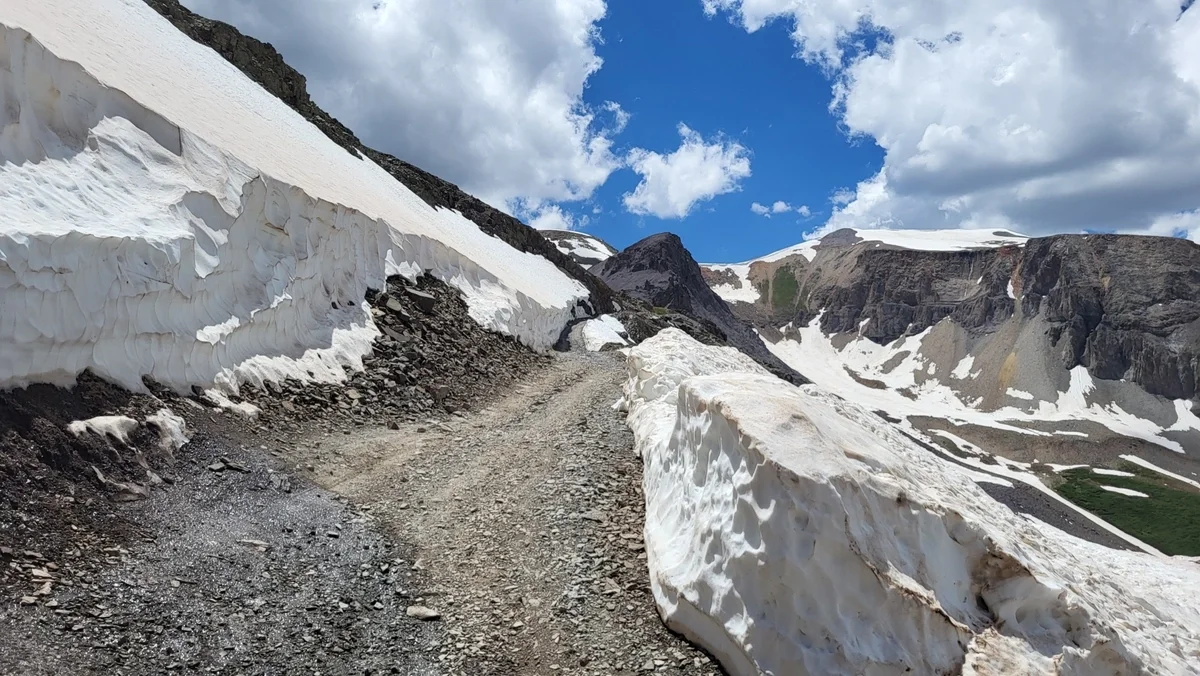
And about that snow, it is the snow melt that dictates when trails open. It is not uncommon for even in late July, a snow drift to block the road.
Now that you know what altitude can do to the weather, let's look at what it can do to your body.
2. Underestimating the altitude
As you gain elevation, air pressure drops, and the amount of oxygen your body can absorb decreases significantly. By the time you reach the elevations of places like Breckenridge or Silverton, your body is working with 30 to 40 percent less oxygen than at sea level, which is why altitude effects become more noticeable.
|
Location |
Elevation |
Available Oxygen |
|
Sea Level |
0 |
100% |
|
Denver |
5,280 feet |
83% |
|
Leadville |
10,162 |
68% |
|
Imogene Pass |
13,216’ |
61% |
Most people are surprised by how quickly they feel the altitude when they first get to Colorado, especially if they’re coming from sea level. The air feels noticeably drier, your breathing may feel a little heavier, and simple tasks like climbing stairs or unloading gear can leave you unexpectedly winded. Some visitors describe a mild foggy feeling, light headaches, or a sense of being slightly off balance, especially the first evening. Sleep can feel different too, lighter, more restless, or interrupted. None of this is dangerous. It’s just your body adjusting to thinner air and lower oxygen. Within a day or two, most people start to feel normal again, but it’s important to take it slow, hydrate well, and ease into your first mountain adventures.
While mild altitude discomfort is common, there is a point where symptoms become more serious and should never be ignored. If someone begins experiencing persistent vomiting, severe headaches that don’t improve with rest or hydration, confusion, difficulty walking in a straight line, extreme shortness of breath at rest, or a sudden worsening of symptoms, this can indicate acute altitude sickness that requires immediate descent to a lower elevation. These symptoms mean the body is no longer adjusting. It is actively struggling. The fix is simple. Go down to a lower elevation. Dropping even a few thousand feet often brings rapid relief. Serious altitude issues are rare for offroad travelers who pace themselves, hydrate, and acclimate properly, but it’s important to recognize the warning signs so you can act quickly and keep your trip safe and enjoyable.
A Note for Travelers With Breathing Conditions
If you have a breathing-related condition such as COPD, emphysema, asthma, or any other chronic respiratory issue, it’s essential to pay close attention not only to the elevations you visit, but especially to the elevation where you sleep. Your body recovers and regulates oxygen levels overnight, and spending the night at high altitude can be significantly more challenging than taking a daytime drive through the mountains. Many travelers with respiratory conditions find they do best when they sleep at lower elevations and save the higher alpine terrain for daytime exploration. When in doubt, consult your doctor before traveling and plan your overnight stops with altitude in mind so you can enjoy Colorado comfortably and safely.
3. Trying to do too much
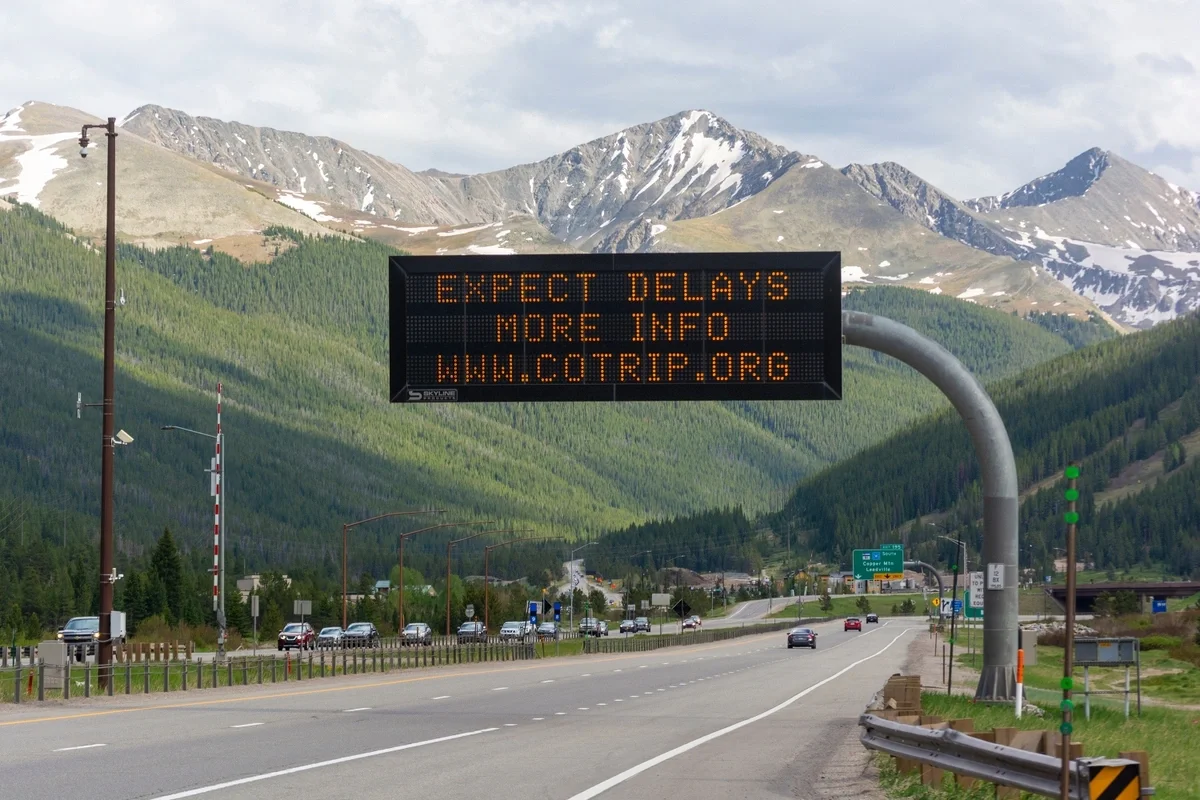
In Colorado, distances on a map can be misleading. What looks like a short drive can easily take two to three times longer once you factor in steep grades, shelf roads, slow-moving traffic, weather delays, and frequent stops for passing, photos, or simply taking it all in. Add in altitude fatigue and afternoon storms, and packed itineraries quickly turn stressful. Planning fewer trails per day and building in buffer time doesn’t mean doing less. It means enjoying Colorado at the pace it’s meant to be experienced.
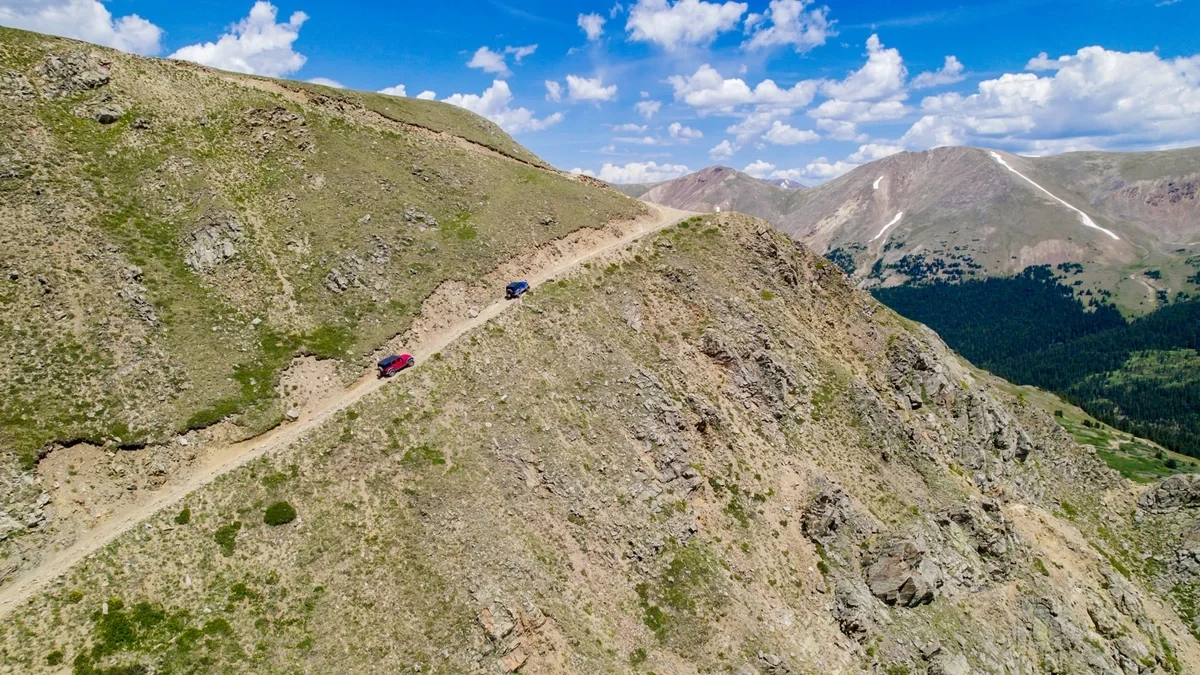
4. Underestimating shelf road exposure
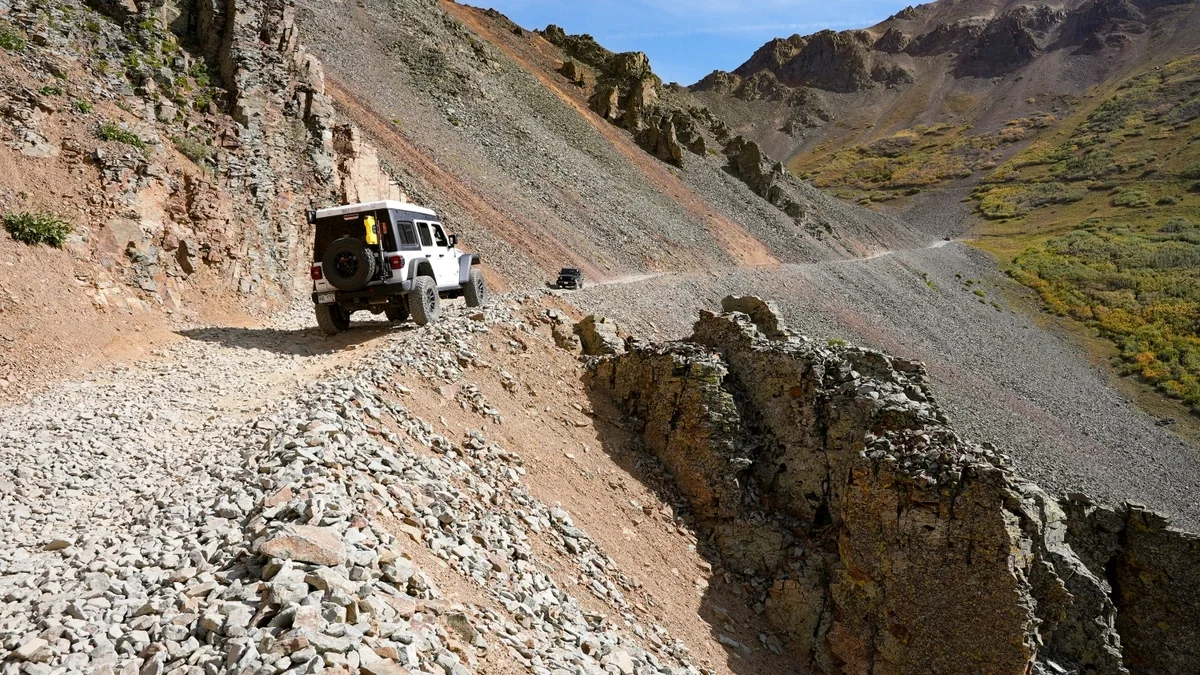
Photos don’t show how big Colorado’s mountains actually are. Some travelers freeze up at exposure they didn’t expect. With proper planning, you can select trails that suit your comfort level. Trails Offroad’s difficulty splits and ratings help tremendously.
5. Thinking It’s the Wild West
Colorado has a ton of public land, but that doesn’t mean you can go anywhere or do anything. The same rules that protect access in the rest of the country apply here, too. So please keep in mind:
- You can’t shoot wherever you want.
- You can’t drive wherever you want.
- You can’t camp wherever you want.
When people ignore these basics, it’s exactly what leads to trail closures and restrictions. The best way to keep Colorado open for everyone is to follow posted signs, stay on designated routes, and respect closures. In Colorado, Stay the Trail isn’t a slogan. It’s how we keep these places open for all of us.
Lodging vs Camping
For many travelers, staying in town provides a comfortable basecamp, easy access to food and fuel, and flexibility when the weather rolls in. While others may only be seeking out the more rustic dispersed camping experiences.
Lodging (Hotels, Airbnb, Cabins)
Towns like Ouray, Silverton, and Telluride offer a range of historic hotels and small inns that reflect their mining town and Old West roots.
Great for:
- Families
- Mixed skill groups
- Travelers who want a reliable town basecamp
- Those looking for flexibility around the weather
Excellent lodging hubs include Ouray, Silverton, Gunnison, and Buena Vista.
Camping (Developed and Dispersed)
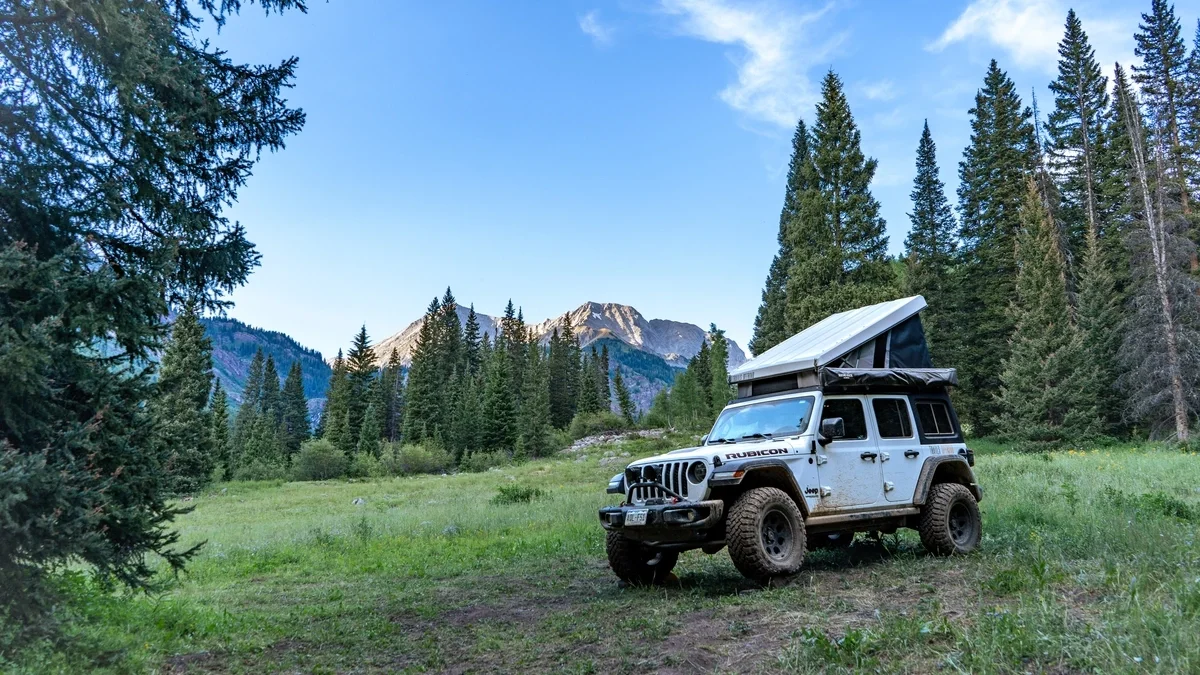
Camping near Ouray and Silverton can be very crowded during peak season. If camping is your plan, arriving early in the day is critical. Dispersed camping opportunities exist, but they are limited, highly impacted, and not always easy to find. This is one reason Trails Offroad is intentional about how camping locations are marked to protect sensitive areas and keep access open long term. Link to your Trails Offroad blog article on why you mark spots.
Developed campgrounds are great for:
- Predictable amenities
- Easier planning
- Groups or families
- Travelers who want a guaranteed place to stay
These are often the best option during busy summer months if dispersed sites are full.
Dispersed camping is great for:
- Incredible scenery
- Lifetime memories
- Natural solitide
But requires extra care and responsibility.
- Fire restrictions are usually in place
- Never camp above treeline
- Follow Leave No Trace principles
- Be prepared for sudden storms
- Pack out everything you bring in
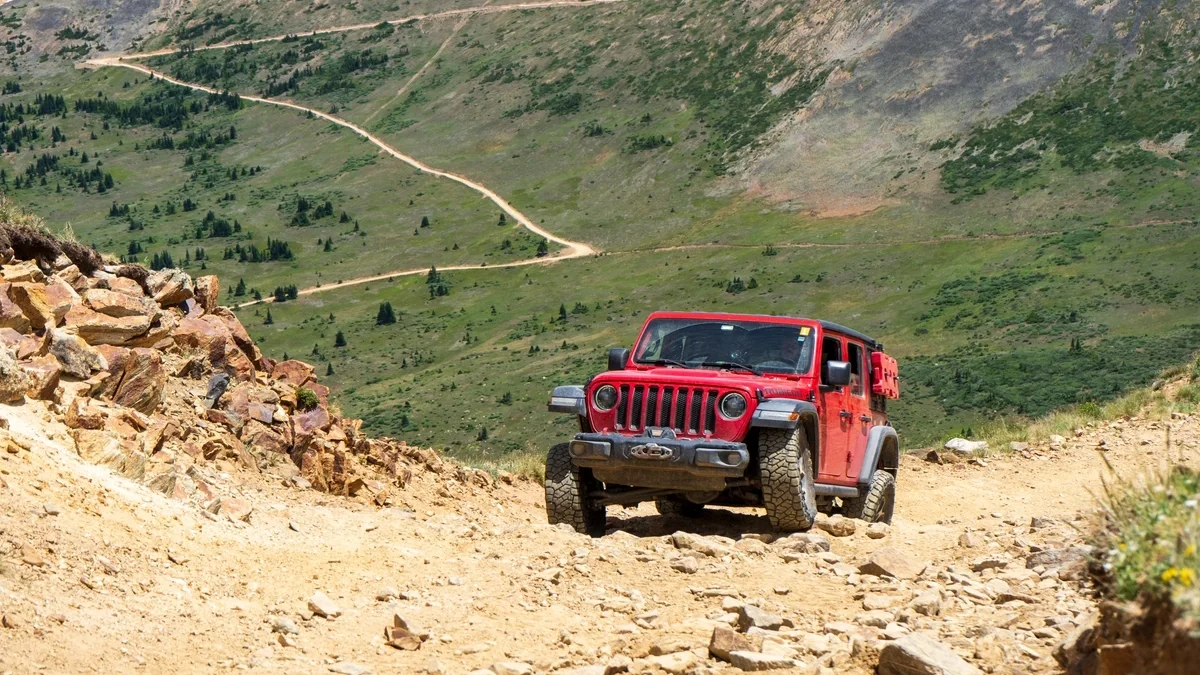
Offroad Trip Styles: Choose the Colorado Week That Fits You
When you boil it down, there are really only two types of Colorado offroad vacations, and everything else is just a variation of these. Picking the right one dramatically simplifies your planning and ensures you don’t try to do too much.
These are the two trip types.
1. Basecamp Trip
Stay in one region, explore deeply, relax more, and maximize trail time.
This is the most popular type of offroad Colorado trip, especially for:
- Families
- Couples
- First timers
- Locals
- Anyone who wants less stress and more scenery
- People who don’t want to pack up camp constantly
How it Works
You choose a single home base, usually Ouray, Silverton, or Telluride, and spend the entire week exploring that one region.
Why This Works So Well
- The San Juans have enough trails for a full week
- Everything is close together
- You reduce daily windshield time
- You can handle weather windows more easily
- You can repeat favorite trails or do scenic alternates
- Campers can fully set up and stay put
- Lodgers can enjoy town amenities
Who This Is Best For
- Families with kids
- People who get tired of packing up camp
- Anyone intimidated by shelf roads
- Photographers
- People flying in and renting a Jeep
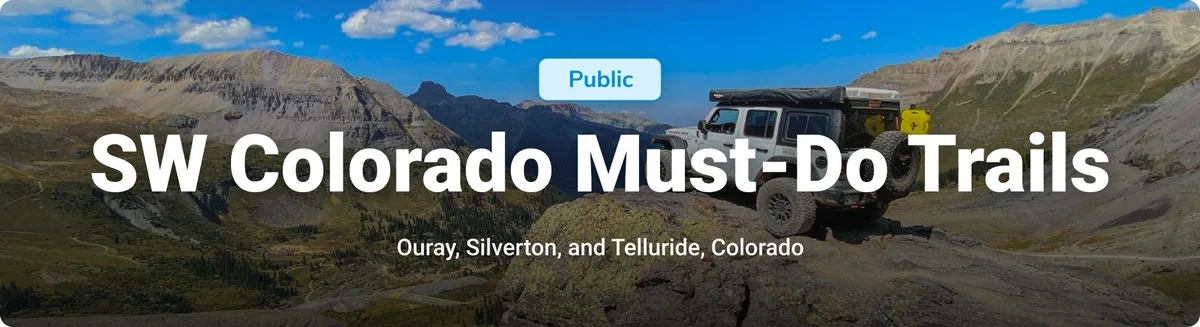
Click the SW Colorado Must-Do Trails list below:
2. Overland Trip
On the move each day with new terrain, new camps, and a true sense of travel.
An overland-style Colorado trip is all about forward momentum. Instead of staying in one region, you’re connecting trails, mountain passes, and valleys, often camping in a new place each night. This style feels more like a journey than a vacation, and it rewards travelers who enjoy variety, flexibility, and problem-solving.
This trip style is especially popular with:
- Couples
- Experienced off-roaders
- Overland and expedition-style rigs
- Travelers who enjoy route planning and logistics
- People who want to see multiple regions in one trip
How It Works
You move from region to region, typically covering two or three major areas over the course of the trip. Camps shift daily or every couple of days, and your route is built to flow naturally from one trail system into the next.
Common overland routes connect:
- Buena Vista to Crested Butte and Taylor Park
- Crested Butte and Taylor Park to Ouray
- Ouray to the Bookcliffs
- Bookcliffs to Steamboat
Each day blends trail time, scenic connectors, fuel planning, and camp selection.
Why This Works So Well
- You experience a wider variety of landscapes
- Each day feels distinct and memorable
- You see parts of Colorado most visitors never reach
- Campsites feel remote and rewarding
- The trip has a strong sense of progression
- Perfect for travelers who don’t want to backtrack
This style turns Colorado into a continuous story instead of a series of day trips.
Who This Is Best For
- Travelers who enjoy changing scenery daily
- Couples or solo adventurers
- Lightweight or efficient camp setups
- Repeat Colorado visitors
- People are comfortable adapting to weather and trail conditions
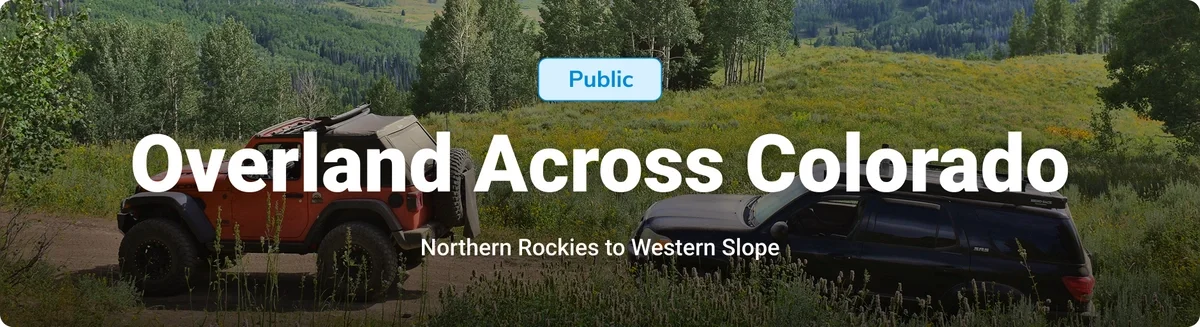
Check out our Overland Route list:
Planning Tips for Overland Trips
- Plan fuel stops carefully
- Build weather buffers into each day
- Always have alternate routes
- Avoid committing to high passes late in the day
- Keep daily mileage realistic
- Expect plans to evolve
Using Trails Offroad Lists, Create Your Own Track, and Follow Mode makes overland planning far easier and reduces on-trail guesswork.
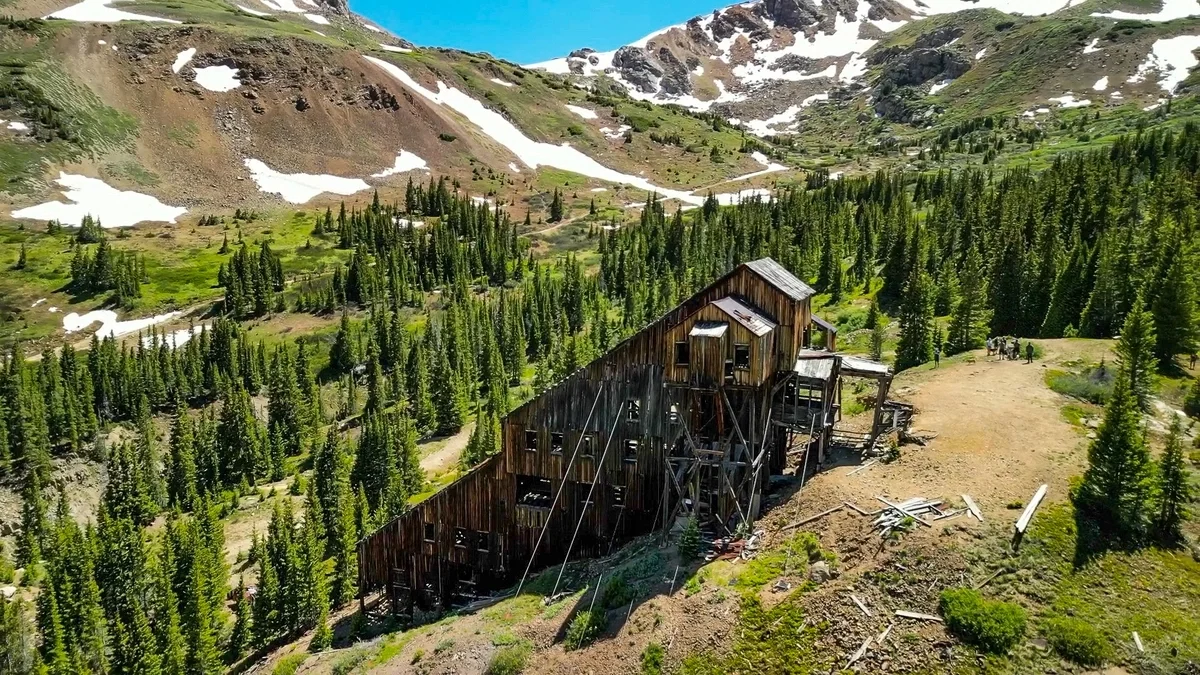
Best Practices when in Colorado
Altitude Tips for Travelers
- Spend 24 hours at a moderate altitude before going high
- Drink more water than you think you need
- Avoid heavy alcohol the first night
- Know the symptoms of altitude sickness
- Don’t push a vehicle’s engine too hard on long climbs
Altitude can turn easy trails into difficult ones for both people and rigs.
Safety Essentials Everyone Should Know
1. Storm Safety
- Get off the high passes early
- Never linger on ridgelines or above treeline if thunder and or lightning is present
2. Shelf Road Etiquette
- Uphill traffic has the right of way
- Keep calm and communicate
- Never park in narrow sections
- Know how to make a safe multi-point turn
3. Vehicle Considerations
- Tire pressure is typically between 12 and 23 psi
- Engine temperatures at altitude
- Fuel range and always plan extra
- Trailers require different approaches
4. Navigation and Backup Plans
- Always carry offline maps
- Always have secondary trail options
- Tell someone where you're going
Final Section: Your Colorado Must-Do List
We’ve curated a complete, recommended list of the top Colorado trails that the Trails Offroad Crew loves to go back to time and time again. This is the perfect starting point to build your own adventure.
Our favorites in Colorado list:
Todd is the Founder of Trails Offroad and an avid wheeler who loves to explore new trails whenever and wherever possible. They say necessity is the mother of all invention, which is true for Todd. His want and desire to find passable trails and new nooks and crannies of the Great American west to explore were his reasons behind starting Trails Offroad. On any given day, you can find Todd on an obscure 4x4 trail, curating Trails Offroad guides, or using his legs to hike to an alpine lake.

Community
Partners

