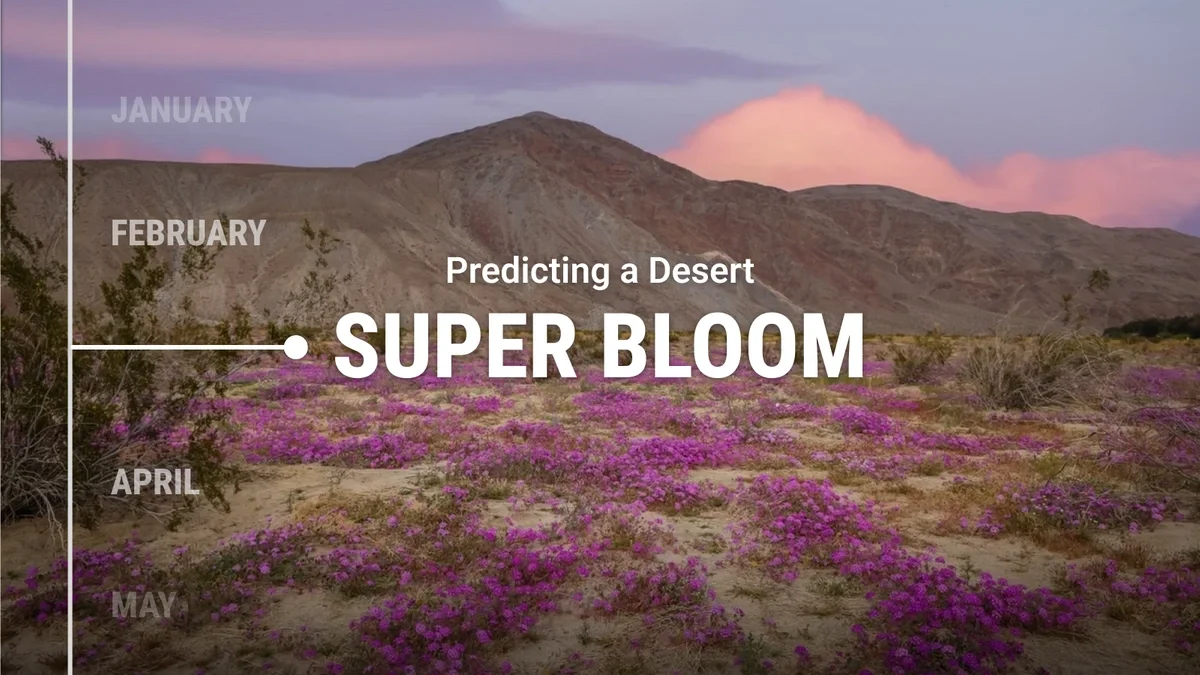
How To: Predicting a Desert Super Bloom
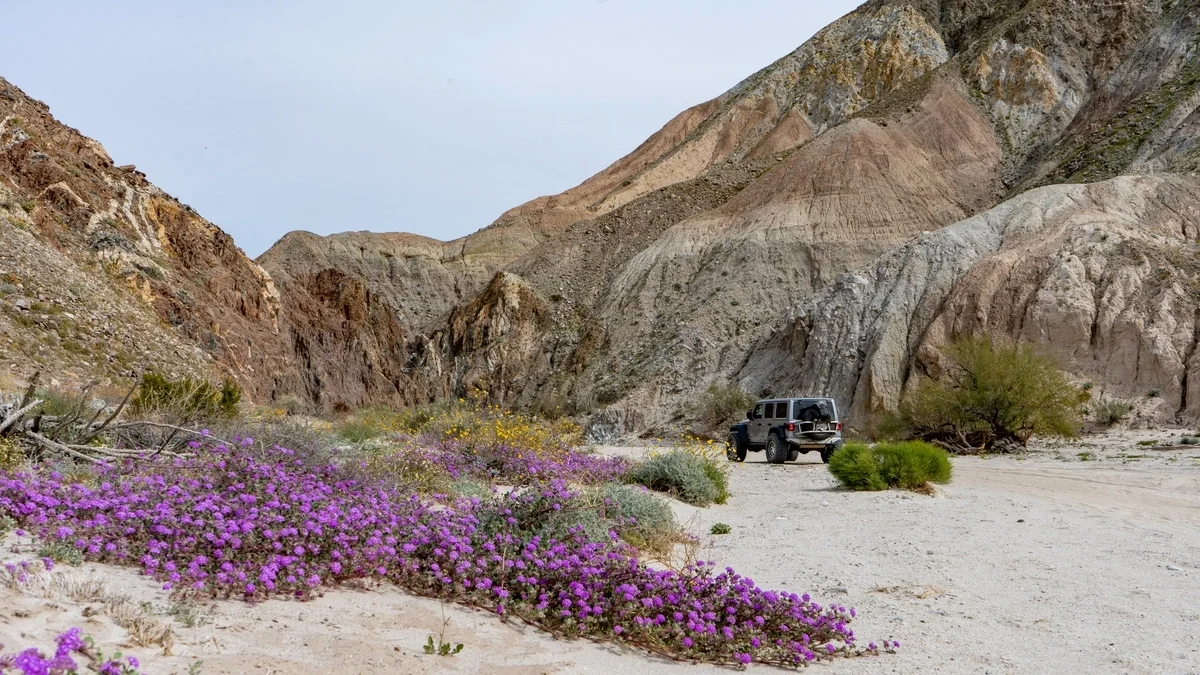
What a Super Bloom Is and Why It’s Special From Behind the Wheel
A desert super bloom isn’t just a good wildflower season. It’s a rare convergence of rainfall, temperature, and timing. Dormant seeds, some of which have waited years or even decades, all awaken at once. For a brief window, landscapes that are usually subtle and spare erupt into color, transforming familiar terrain into something almost unrecognizable.
There’s no strict scientific definition of a super bloom. Ecologists describe these events as exceptional mass flowering or episodic annual plant emergence. What we as the public call a super bloom is simply a year when desert wildflowers appear in unusual density, diversity, and geographic scale, far beyond normal seasonal displays.
They don’t happen often. Some deserts may go ten years or more between true super blooms. And when they arrive, they’re fleeting. measured in days or weeks, not seasons.
For overlanders and off-road drivers, that rarity is exactly what makes a super bloom special.
The most dramatic bloom experiences don’t usually happen at paved overlooks or roadside pullouts. They unfold along lightly traveled desert roads, broad alluvial fans, remote washes, and wide open valleys — places you reach by driving through the landscape, not skimming past it. Trails you’ve driven dozens of times suddenly feel new. Landmarks you know by silhouette become backdrops for color and contrast you may never see there again.
A super bloom doesn’t change the desert permanently.
It reveals it temporarily.
And because the window is so narrow, experiencing one isn’t about booking the perfect trip months in advance. It’s about awareness, flexibility, and being ready when the desert decides to put on a show.
That readiness begins long before the first flower appears.
The First Question: Is This the Right Kind of Rain?
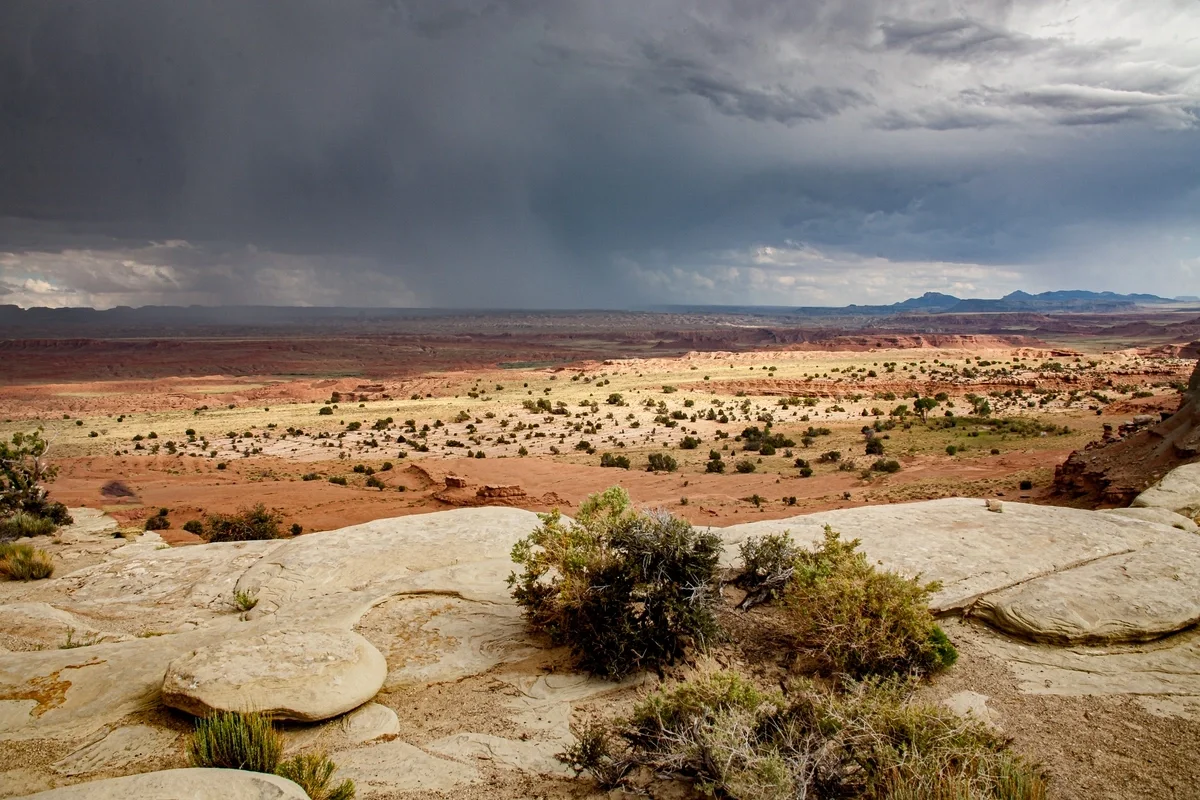
Not all wet winters lead to super blooms.
The years that produce them tend to share a specific rhythm, not just high rainfall totals. Repeated storms matter more than dramatic ones. When rain arrives every week or two through December and January, desert soils have time to absorb moisture deeply, reaching seed layers that may not have been activated in decades.
What you want to notice during winter:
-
Ground that stays damp for days, not hours
-
Puddles lingering in low spots
-
Creosote flats and open valleys darkened with moisture
-
No long dry gaps between storms
This kind of rain builds potential quietly. Nothing looks spectacular yet — and that’s exactly the point.
Cold Is a Friend, Not a Bug
It’s tempting to wish winter would warm up, but cool weather is often what makes a bloom possible.
Lower temperatures slow evaporation, reduce stress on newly germinated plants, and allow roots to establish before heat arrives. If storms are followed by cold nights and overcast days, the desert is doing critical work out of sight.
Sun too early can shut the door just as quickly as drought.
The First Real Signal: Green Without Flowers
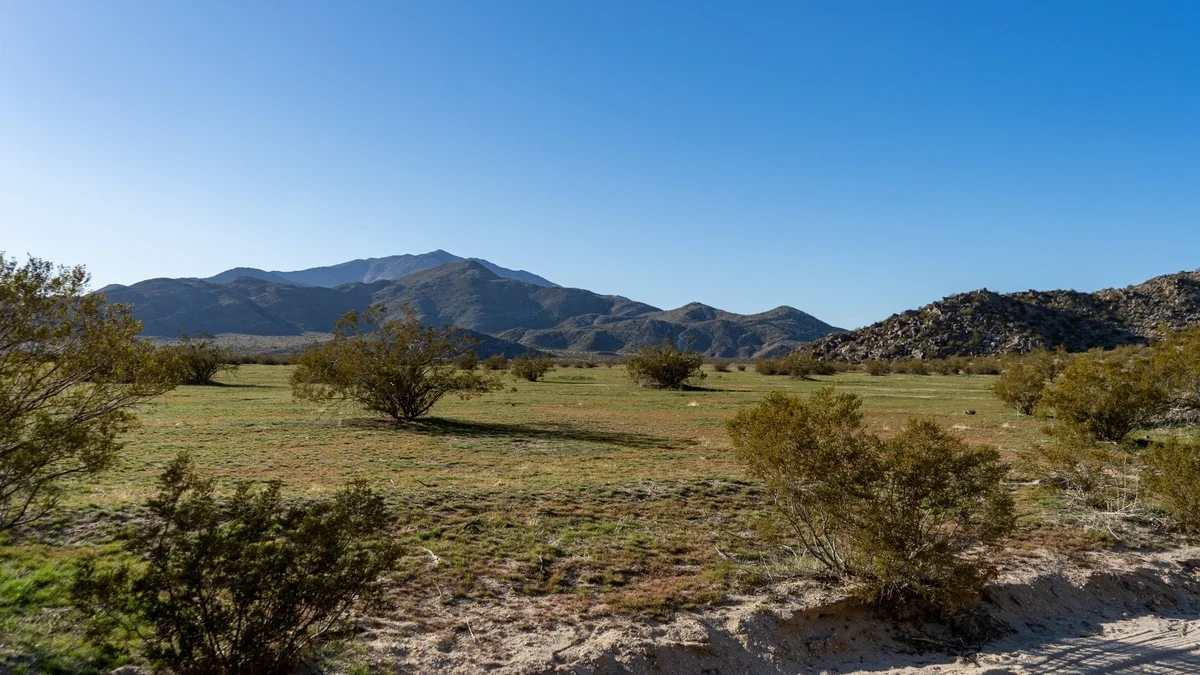
By late January into early February, experienced desert watchers stop looking for color and start looking for structure.
You’re scanning for:
-
Tiny green rosettes hugging the ground
-
Widespread low growth, not just along roadsides
-
Valleys and fans showing a faint green haze
This early vegetative phase is one of the strongest indicators that the seed bank has fully activated. Flowers come later, but without this stage, they never come at all.
From Watching to Readiness: A Fluid Window, Not a Set Date
Super blooms don’t unfold on a calendar. They unfold under certain conditions, and when those conditions align, the window can open quickly and close just as fast.
That’s why bloom season is best treated as a standby period, not a scheduled trip.
Late February: Be Watching Closely
By late February, the question often shifts from “Could this happen?” to “Is it starting?”
Low elevations may begin showing isolated color, and early bloom reports start surfacing... hints, not carpets. This is when it makes sense to have your offroad vehicle serviced, gear packed, and plans flexible.
You’re not chasing flowers yet. You’re staging.
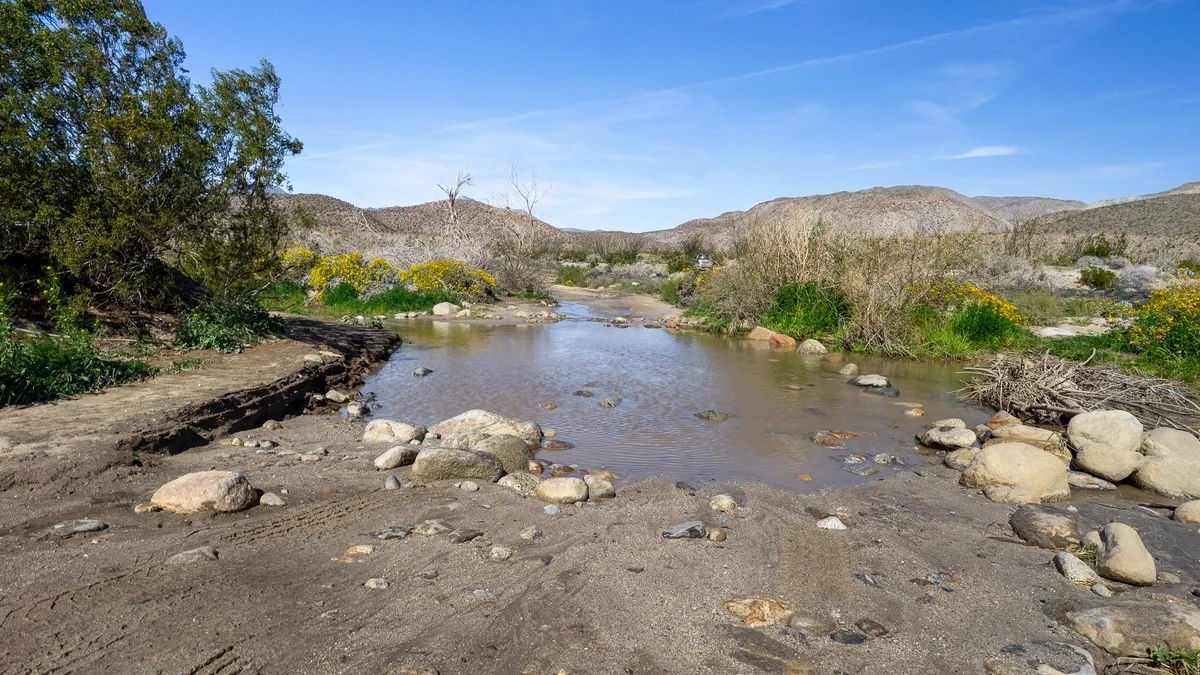
March: The Go-Time Window
If a winter is going to deliver, March is when it usually reveals itself.
Blooms can expand rapidly and unevenly:
-
One valley peaks while another is just waking up
-
Elevation creates staggered timing
-
Trails can look completely different week to week
This is when being loaded and ready matters. The best experiences often go to those who can pivot regions or adjust plans on short notice.
Peak bloom doesn’t last long - sometimes days, not weeks.
Late March to April: The Shift Upward
As temperatures rise, lower elevations begin to fade but the season doesn’t simply end.
Higher terrain, foothills, and north-facing slopes often take over. Blooms may be less dense but more diverse, linger longer, and come with fewer crowds. For those willing to explore beyond the obvious stops, this phase can be just as rewarding.
Regional Personalities: How Each Desert Shows Its Color
When a super bloom happens, it doesn’t look the same everywhere. Each desert has a recognizable color signature, a dominant palette that experienced desert travelers begin to associate with place as much as terrain. Knowing those color tendencies helps you recognize when you’re arriving at the right region at the right moment.
Mojave Desert
Muted yellow with soft purples and white accents.
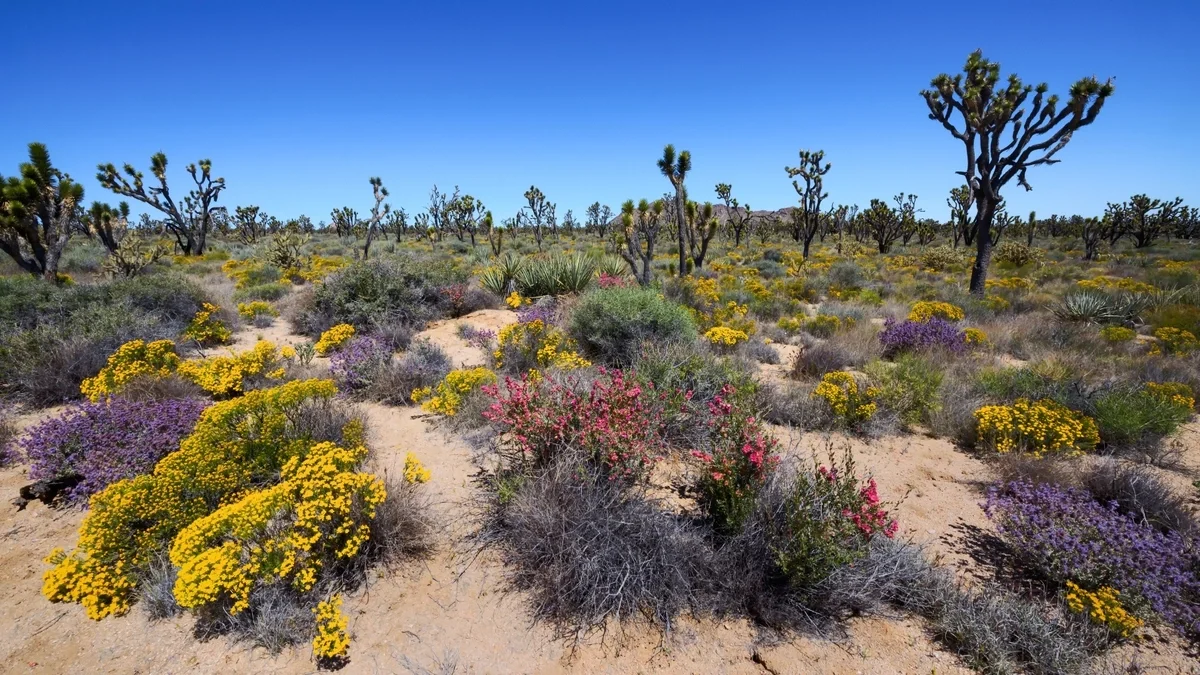
The Mojave often starts quietly, then surprises people. Open valleys and gentle slopes tend to light up first, with elevation creating a drawn-out, staggered season rather than a single explosive peak.
Visually, the Mojave resolves into a subtle, painterly mix:
-
Pale to medium yellow from desert dandelion and desert marigold
-
Lavender to deep purple streaks from Mojave lupine
-
Small white blooms with dark centers from five-spot flowers
Rather than a solid carpet, color appears in layers and bands, changing as you move across valleys and climb in elevation. It’s a desert that rewards patience and movement.
Anza-Borrego Desert State Park
Bold yellow fields with sweeping magenta and violet.
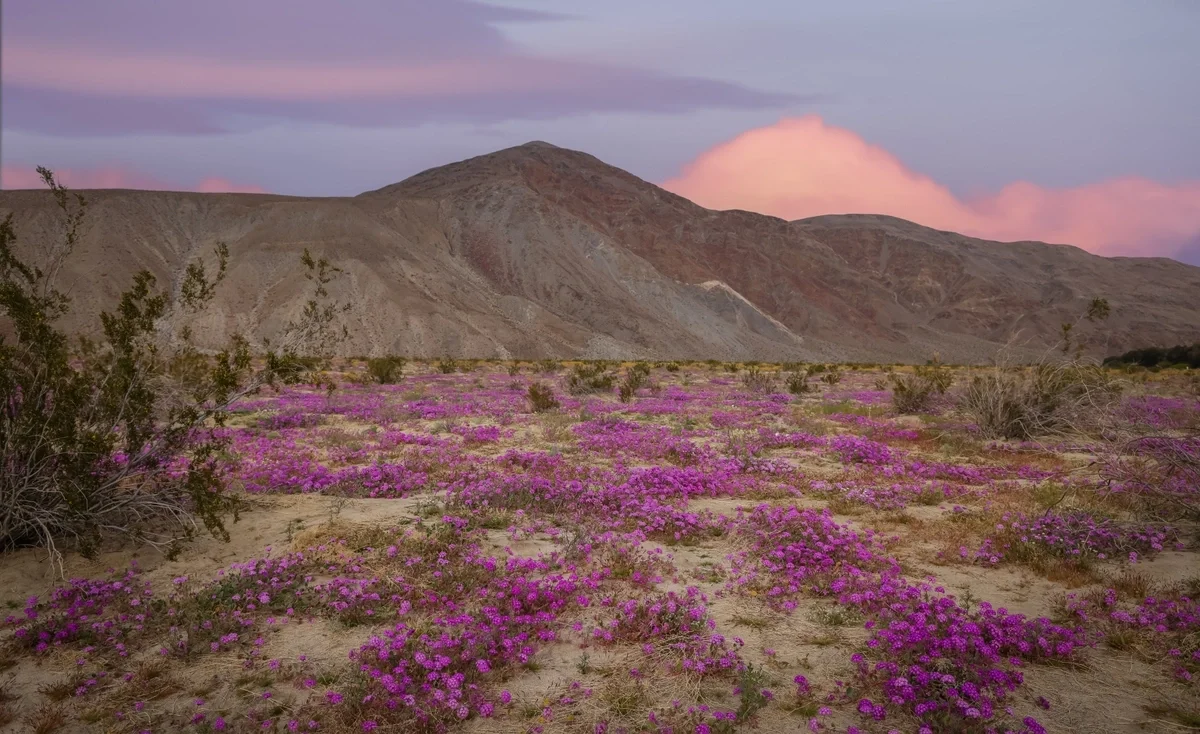
Anza-Borrego is famous because it scales color dramatically and quickly. Wide alluvial fans and an intact seed bank allow blooms to spread across entire basins in a matter of days when conditions align.
Its signature palette is unmistakable:
-
Bright, dominant yellow from desert sunflowers
-
Sweeping magenta and hot pink from sand verbena
-
Deep violet and blue-purple from phacelia
-
Soft yellow-white highlights from primrose
In strong years, color is visible at landscape scale — hillsides, valley floors, and distant fans all reading as fields of yellow and purple rather than isolated patches.
Lower Sonoran Desert
Warm golds with intense blues and red accents.
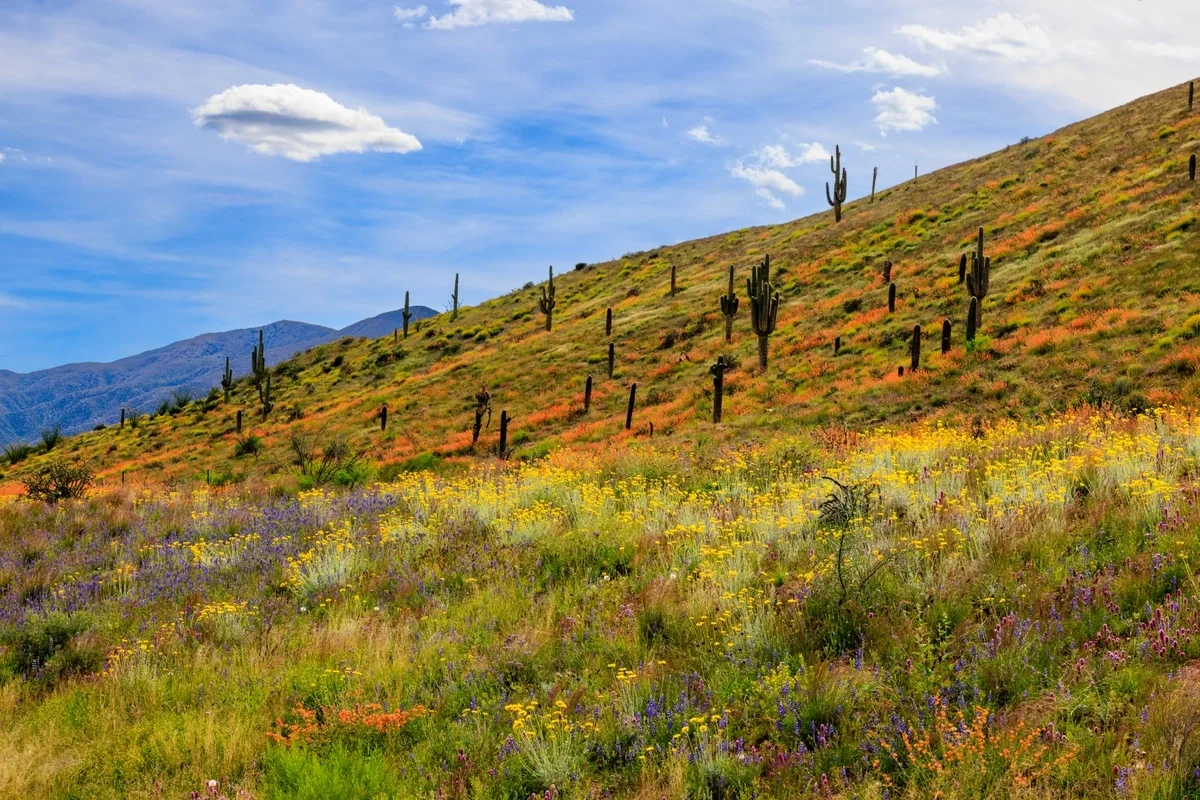
The Lower Sonoran Desert plays by different rules. Winter rain sets the stage, but warmth arrives earlier, making blooms fast, vivid, and often short-lived.
The color palette here feels warmer and more saturated:
-
Rich gold and orange-yellow from Mexican gold poppy and Arizona poppy
-
Striking electric blue from lupine
-
Red to coral accents from owl’s clover
The effect is high contrast and energetic — colors pop hard against desert soils, then fade quickly as temperatures rise. Timing and elevation matter more here than almost anywhere else.
Death Valley
Overwhelming gold with surreal white and purple highlights.
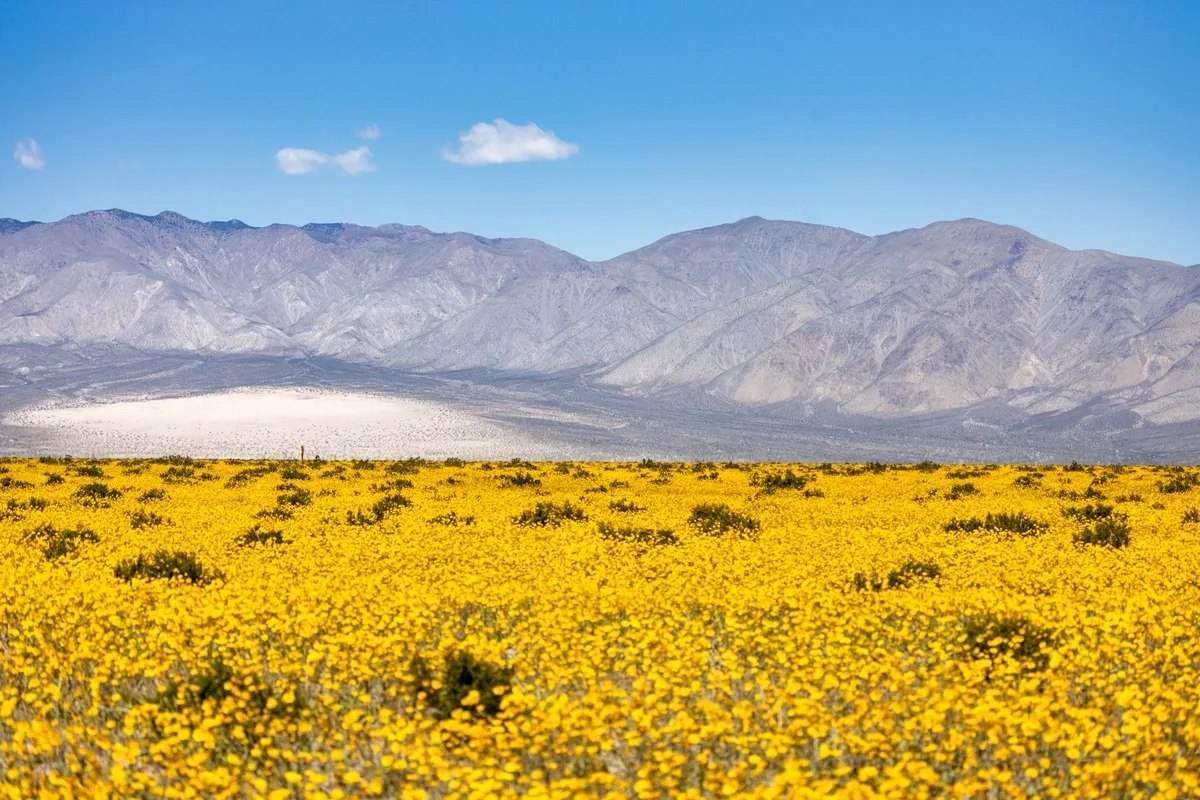
When Death Valley blooms, it does so at a scale that feels almost unreal. Valley floors, fans, and canyon walls can all participate at once, creating a sense of immersion that’s hard to replicate elsewhere.
Its bloom palette is dominated by:
-
Deep, expansive gold from desert gold
-
Ethereal white from gravel ghost
-
Soft purple from phacelia
-
Pale yellow-white from evening primrose
Against salt flats, dark rock, and extreme relief, the contrast amplifies the color, making the bloom feel almost otherworldly.
Why Readiness Beats Prediction
Every super bloom year shares one truth: the people who experience the best moments didn’t guess the right date — they were prepared to act.
Conditions can shift overnight.
Heat can accelerate or end a bloom early.
Wind can shorten peak color dramatically.
Having your vehicle ready, gear packed, and plans flexible matters more than any forecast.
Paying Attention Is the Reward
Standing in the rain in January doesn’t feel magical. Mud on the tires, gray skies overhead and nothing blooms yet.
But if storms keep coming, temperatures stay cool, and the desert quietly turns green, something rare may already be underway.
Sometimes getting lucky isn’t about timing at all.
It’s about being ready when the desert decides it’s time.

Todd is the Founder of Trails Offroad and an avid wheeler who loves to explore new trails whenever and wherever possible. They say necessity is the mother of all invention, which is true for Todd. His want and desire to find passable trails and new nooks and crannies of the Great American west to explore were his reasons behind starting Trails Offroad. On any given day, you can find Todd on an obscure 4x4 trail, curating Trails Offroad guides, or using his legs to hike to an alpine lake.

Community
Partners

