
Mojave Road (21.43 miles away)
Baker, California
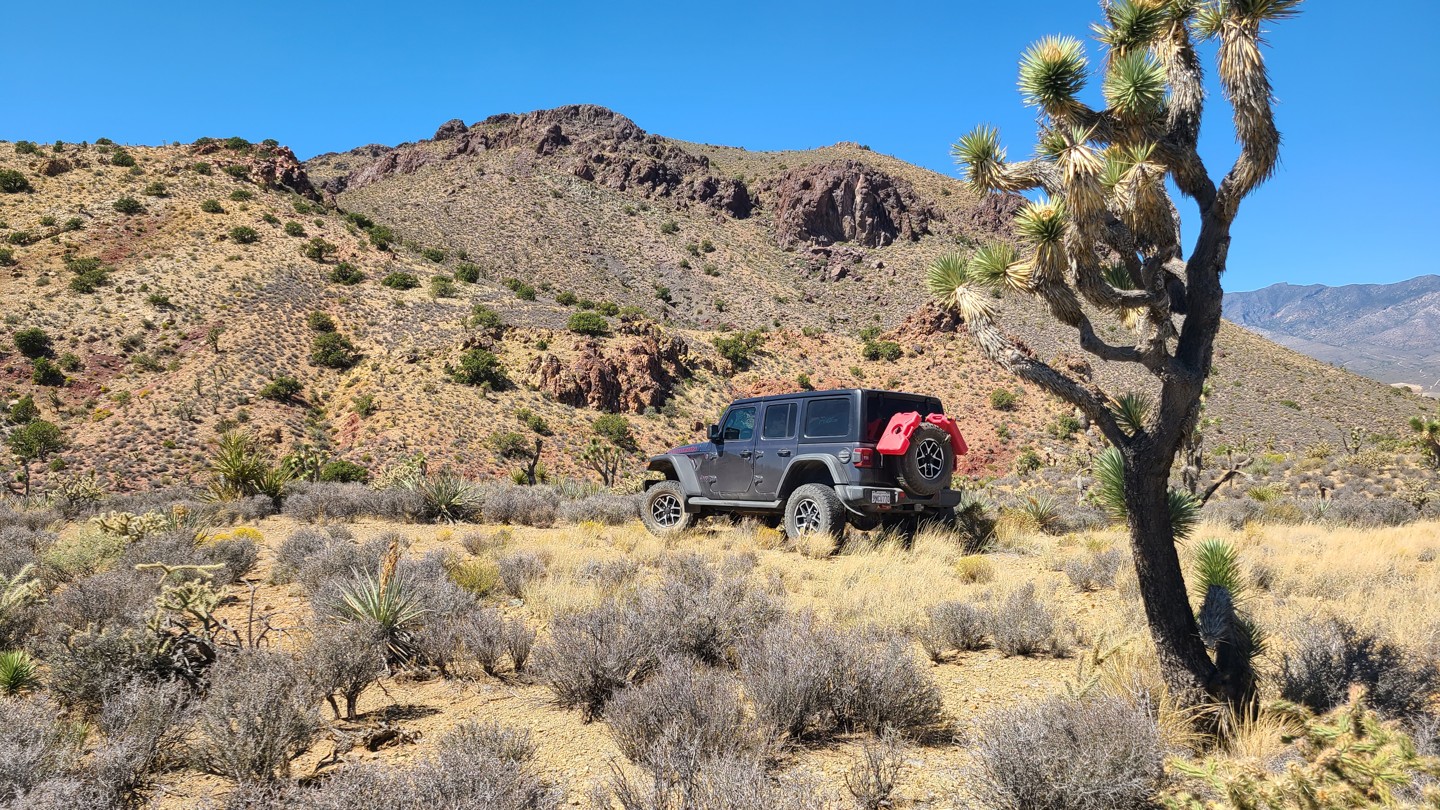

Kokoweef Road (NN218), also shown as Zinc Mine Road on some maps, is an easy Mojave Desert drive combining Joshua tree woodland, rugged limestone hills, historic mining sites, and one of the region’s most enduring treasure legends. Located on BLM land south of Mountain Pass, most of the route follows a relatively flat and generally maintained dirt road, while numerous connecting trails offer opportunities to explore the surrounding mining landscape. Near the western end, several old mine sites remain nearby, although their access roads have deteriorated considerably and are better explored on foot.
Nearby Kokoweef Peak contains several natural limestone caverns tied to the famous legend of the “Lost River of Gold.” Prospector Earl Dorr claimed that while exploring the caverns in 1927, he discovered an enormous underground canyon containing a flowing river bordered by gold-rich black sand. Although his story was never verified, it inspired decades of tunneling and prospecting around Kokoweef Peak. During the early 1970s, mine operators even offered cavern tours and sold mineral specimens to help fund continued exploration. Old signs advertising the Kokoweef caverns can still be seen along the road today.
The northern portion of Kokoweef Road also follows Segment 2 of the Eastern Mojave Heritage Trail, part of a roughly 733-mile backcountry route through the Mojave Desert. About three miles from the northern end, a large open clearing provides room for several vehicles and makes a convenient dispersed base camp for exploring Kokoweef Peak, the surrounding mines, and nearby desert trails.

