
Mojave Road (19.34 miles away)
Baker, California
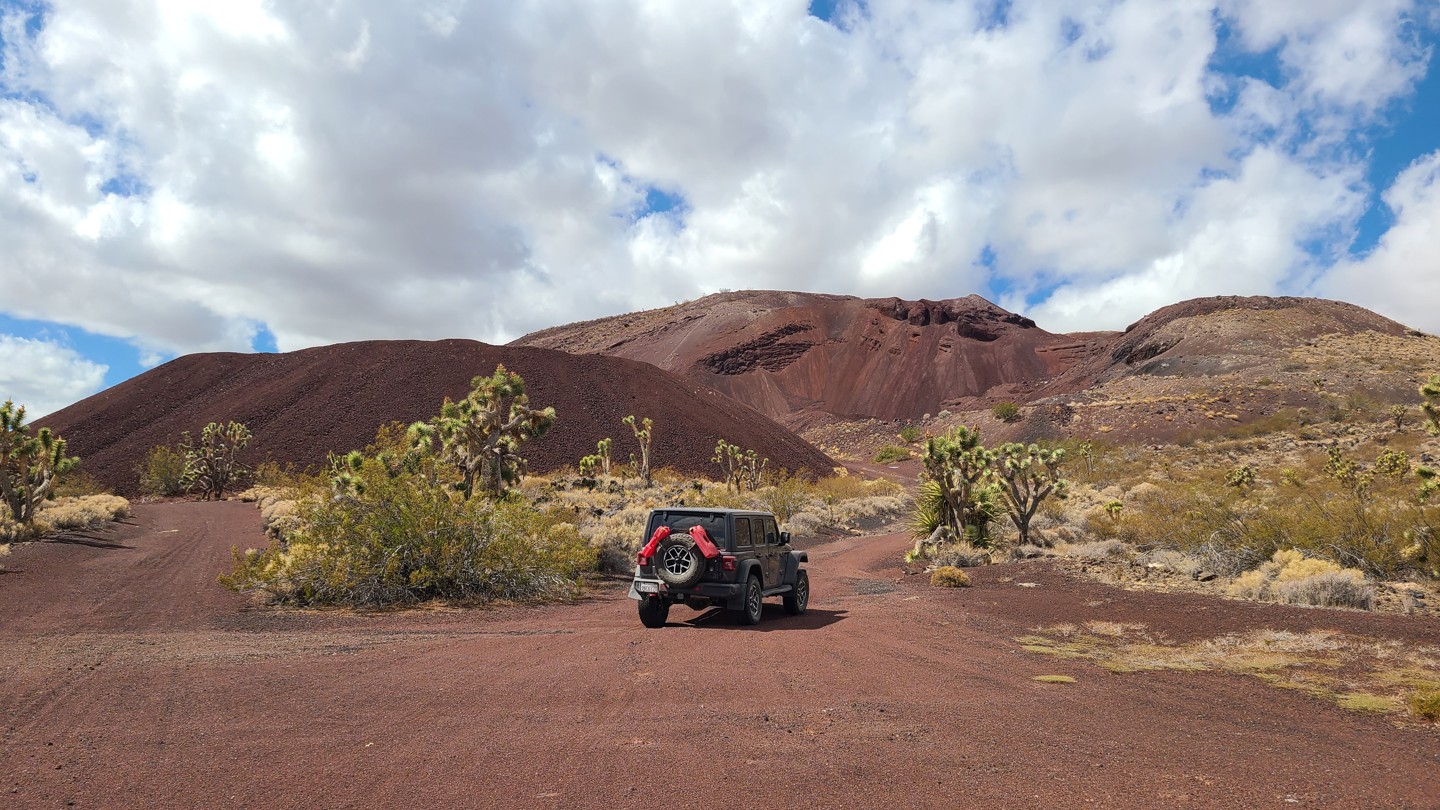

Within Mojave National Preserve, Cow Cove Road combines ranching history, abandoned mining equipment, volcanic scenery, and an enjoyable backcountry drive. The trail passes through the historic Cow Cove cattle ranch, where several buildings, a massive corral, and an impressive rock-covered 80,000-gallon water tank remain as reminders of the area’s ranching past.
The trail’s most fascinating destination is the Cima Cinder Mine. Closed around 1990, the site still contains much of the machinery once used to excavate and process volcanic cinders. The weathered equipment and surrounding red-and-black volcanic terrain create one of the most interesting historic mining scenes in this part of the Preserve. Expansive views to the east reveal numerous volcanic cones of the Cima Volcanic Field, an extensive landscape also known as the Cinder Cone Lava Beds.
Cow Cove Road crosses relatively flat, sandy desert and is easy to travel in dry conditions. Beyond the Cima Cinder Mine, however, the character changes dramatically as the road crosses hard, uneven, and rugged lava flows before reaching its southern end. High clearance and four-wheel drive are recommended for this rougher section.
The entire length of Cow Cove Road is part of Segment 2 of the Eastern Mojave Heritage Trail, a roughly 190-mile portion of the larger 733-mile backcountry route developed through the efforts of the Bureau of Land Management and the Mojave Desert Heritage and Cultural Association.
The best dispersed camping opportunities are near Cow Cove Ranch at the northern end of the trail and around the Cima Cinder Mine, where numerous level sites can be found on the broad, flat cinder-covered ground.

