
Mojave Road (27.32 miles away)
Baker, California
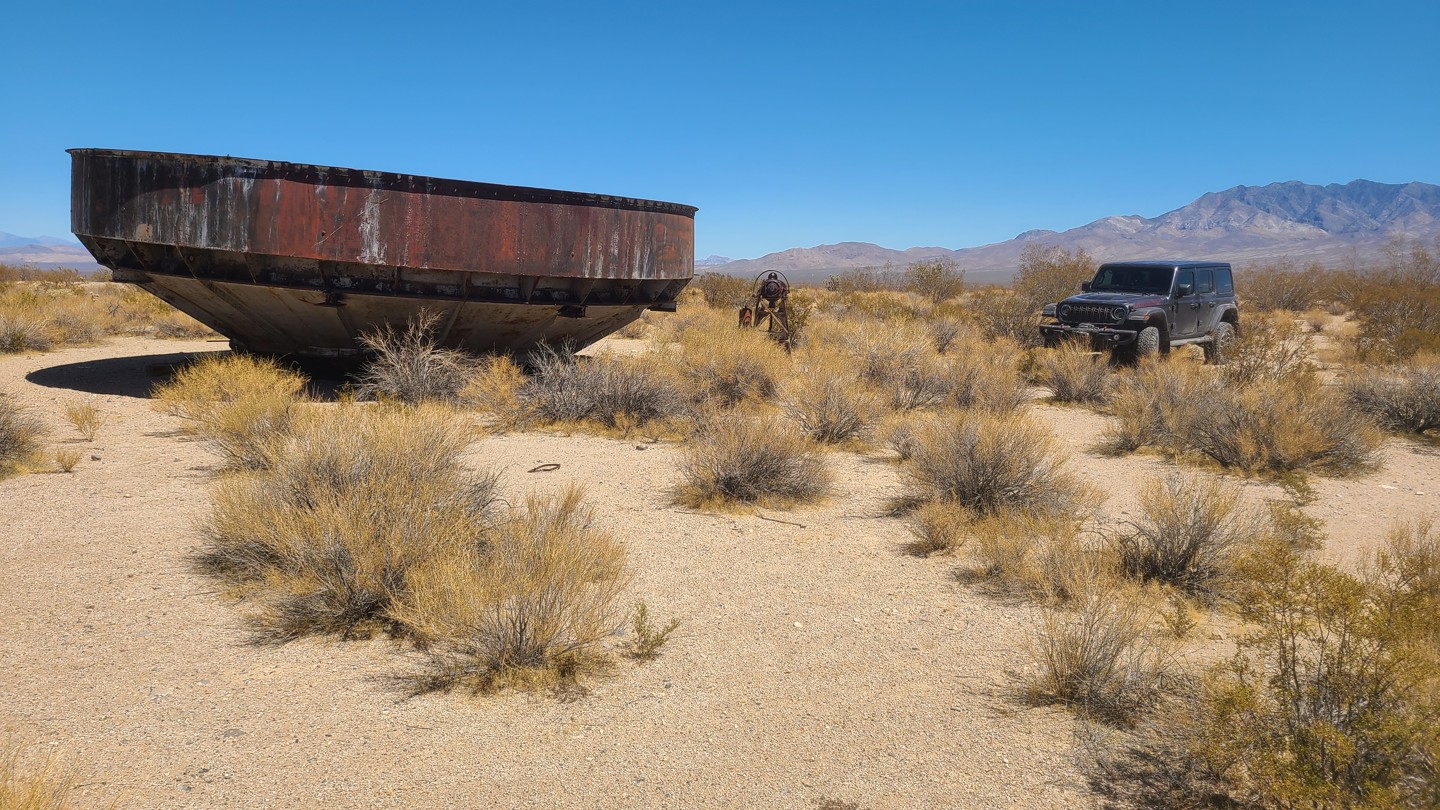

BLM roads NN376 and NN395 combine to form a remote backcountry route across a broad desert basin and through the historic Valley Wells mining district. Fascinating remnants of the area’s mining history remain along the way, including a massive steel Dorr thickener once used to separate finely ground minerals from water.
The route also passes the extensive ruins of the Valley Wells copper smelter. Constructed beginning in 1898 and placed into operation in 1899, the smelter processed copper ore hauled by 20-mule teams from the Copper World Mine near the eastern end of the trail. Regular operations ended in 1918. Massive slag piles, concrete foundations, and other industrial remains provide a fascinating look at the large-scale mining activity that once occupied this now-silent desert basin.
Nearly the entire length of NN376 and NN395 is included in Segment 2 of the East Mojave Heritage Trail (EMHT), an approximately 190-mile portion of the larger 733-mile route. Segment 2 crosses some of the most isolated terrain in the eastern Mojave and is maintained in part by the Bureau of Land Management and the Mojave Desert Heritage and Cultural Association.
A high-clearance four-wheel-drive vehicle is recommended, particularly beyond Valley Wells toward the Copper World Mine, where the road becomes considerably rockier.
Numerous dispersed camping sites can be found on the surrounding BLM land. One especially inviting campsite lies beneath the deep shade of a large Fremont cottonwood just south of the Valley Wells Smelter—a rare and welcome oasis in this exposed desert landscape.

