
Mojave Road (61.03 miles away)
Baker, California
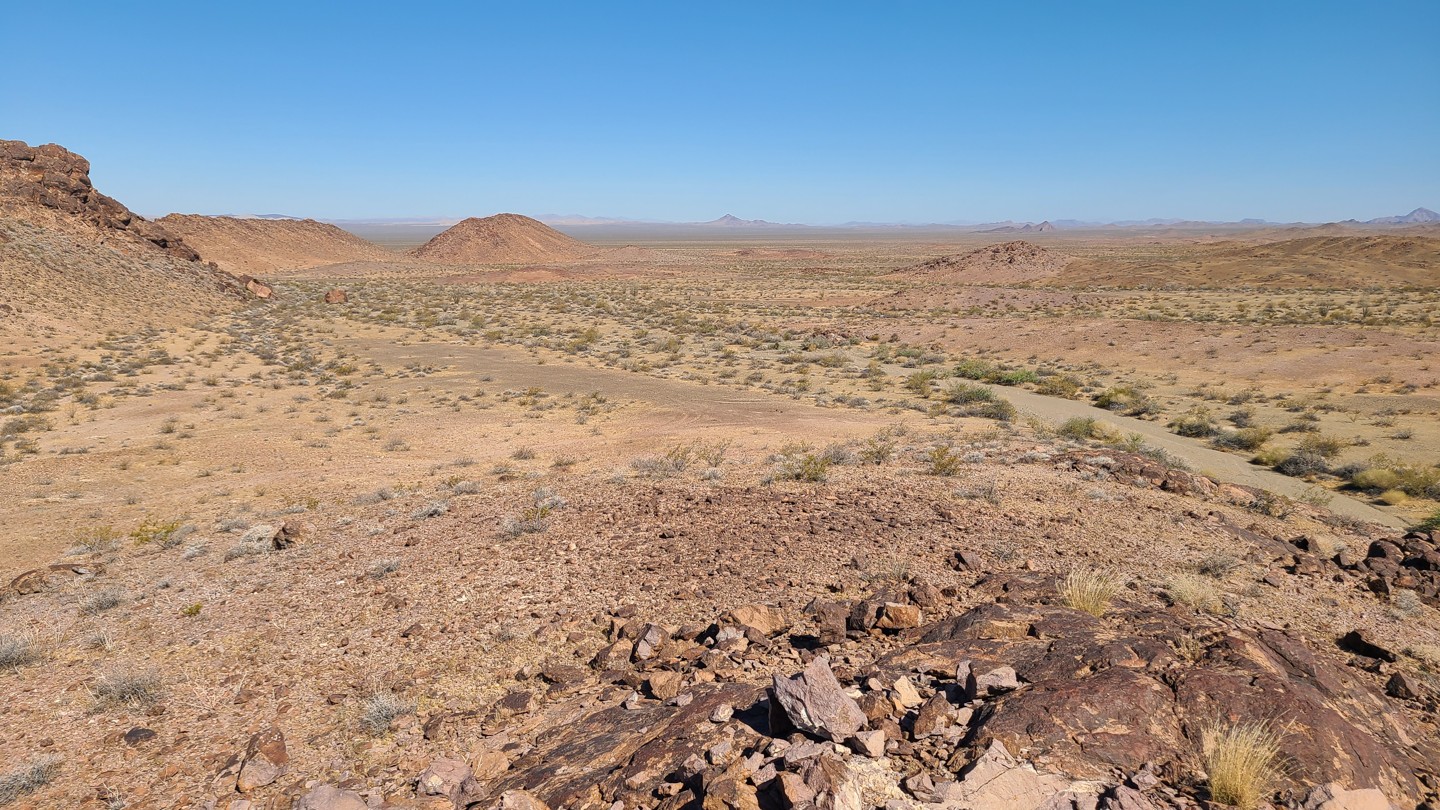

Skirting the western edge of the Chemehuevi Mountains Wilderness, this network of desert tracks winds past the Snaggletooth Range and the Snaggletooth Campground. A short spur heading west (NS428) before the campground climbs toward the summit, where expansive views open across Chemehuevi Valley and the surrounding Mojave backcountry.
This route forms part of the Eastern Mojave Heritage Trail (EMHT), Segment 4. EMHT Segment 4 is a curated 145-mile corridor showcasing some of the most remote and visually striking terrain in the Eastern Mojave. The broader EMHT system is managed through a partnership between the Bureau of Land Management (BLM) and the Mojave Desert Heritage and Cultural Association, which maintains route information for all four segments of the 733-mile network.
At the heart of this section lies Snaggletooth Primitive RV Camp, set against the rugged backdrop of Snaggletooth Ridge. The campground includes five designated sites with large, level pads suitable for multiple RVs. Cell service is generally reliable, and resupply options are available approximately 20 miles north along US-95 in Needles. Additional informal campsites are dispersed along the surrounding ridgelines and washes. An especially secluded and sheltered campground is found at the end of the NS 428 spur, whose entrance is north of the RV Camp.
The route surface consists primarily of hard-packed gravel and sand, offering an easy, well-graded drive under normal conditions. Most of the main track is suitable for high-clearance two-wheel-drive vehicles. However, adjacent spur routes and exploratory trails in the area are more technical and typically require a high-clearance four-wheel-drive vehicle.

