
West Rim (43.97 miles away)
Washington, Utah
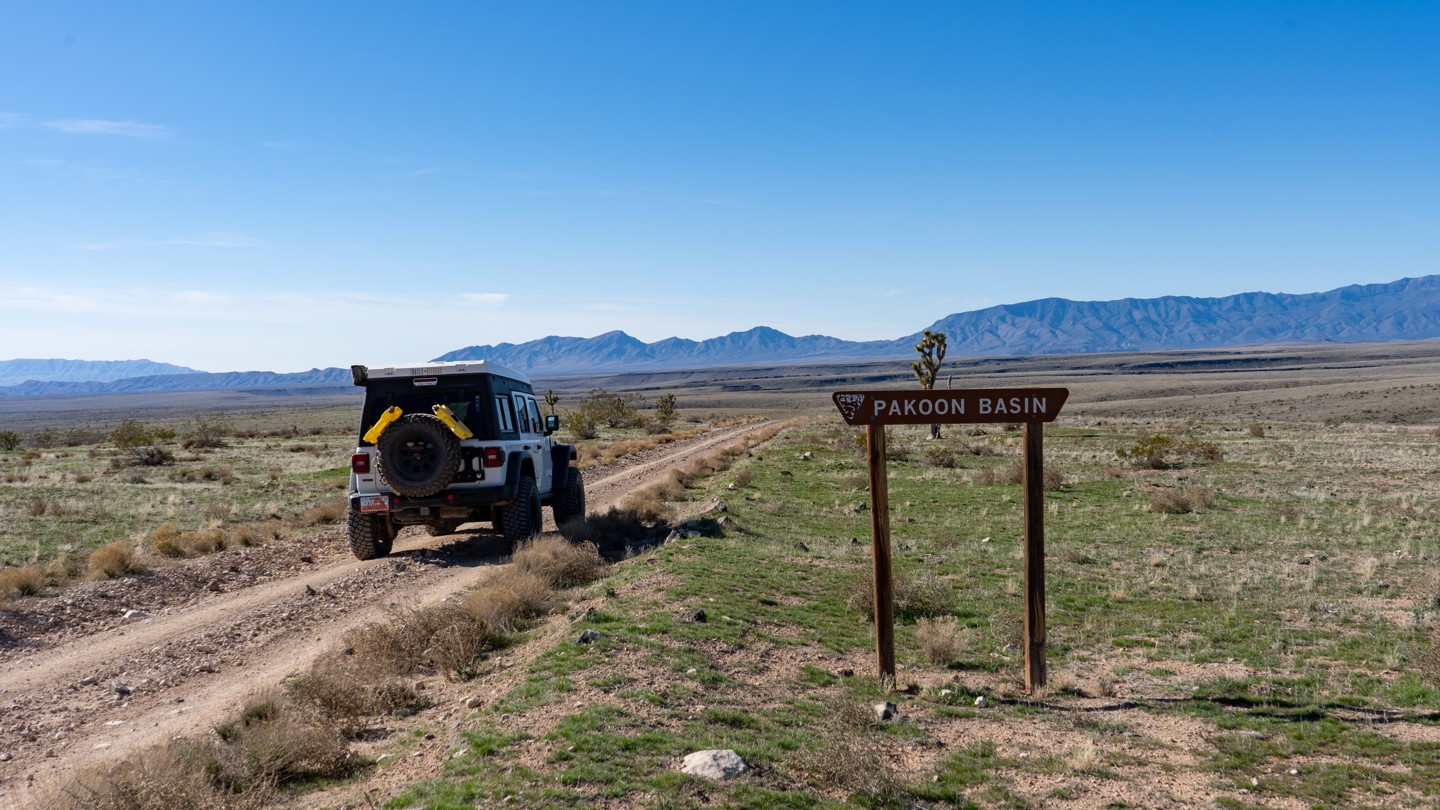

Pakoon Basin connects Mud Mountain Road to Pakoon Springs Road and delivers a dramatic drive through several distinct microclimates. The route transitions from wide-open, desolate high desert plains to valleys framed by towering cliffs in the distance, then climbs across lava-rock-encrusted escarpments with vistas dotted by barrel cactus.
The road is mostly small rock and hard, compacted dirt, and is suitable for any high-clearance vehicle equipped with rugged off-road tires, such as all-terrain tires. While the route can technically be driven in 2WD, a 4WD or AWD vehicle is strongly recommended due to the sustained strain the rough terrain places on suspension components and the rapidly changing conditions that can follow any weather event. Low-profile tires are not recommended, and all travelers should carry at least one full-size spare.
Dispersed camping in the northern half is limited to only a few practical sites. The southern end offers a greater number of potential spots, though very few are previously disturbed.
Interestingly, the name “Pakoon” is far from common. According to research documented in Southern Paiute place-name studies referenced by the National Park Service, “Pakoon” is derived from the Southern Paiute name Paakuna for Pakoon Spring(s), combining terms for “water” (paw) and “fire” (koonaw’). Over time, the name was anglicized to “Pakoon” and applied not only to the springs but also to the surrounding basin.

